Участь в онлайн-заході FOREU4ALL Policy Learning Lab
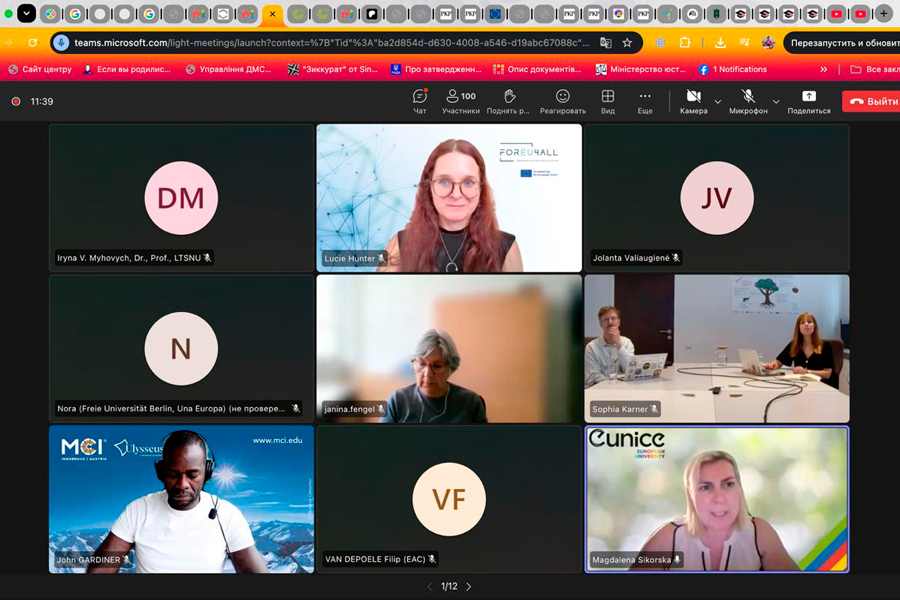
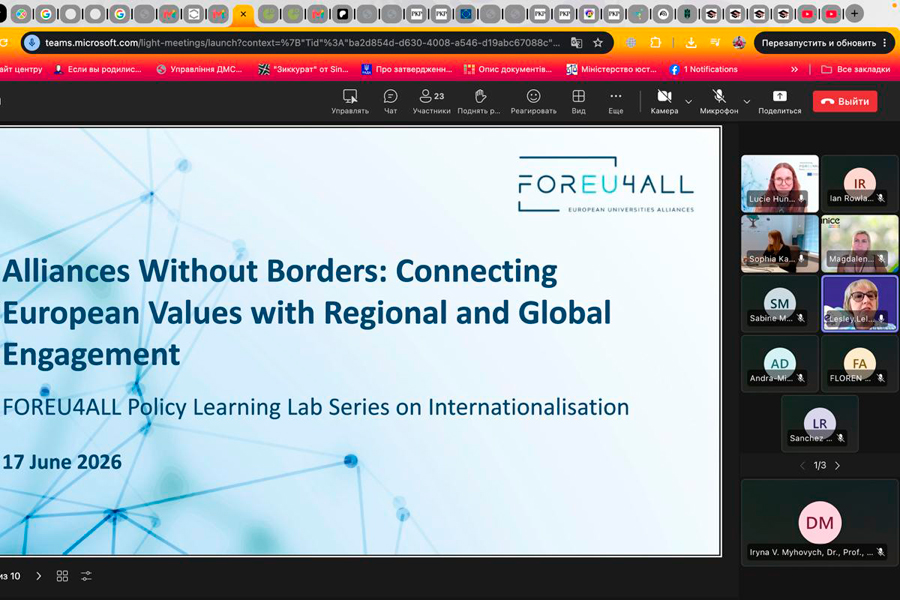
17 червня в.о. проректора з науково-педагогічної роботи, начальник відділу міжнародних зв’язків Ірина В. МИГОВИЧ долучилася до онлайн-заходу FOREU4ALL Policy Learning Lab Launch Webinar «Alliances Without Borders, Connecting European Values with Regional and Global Engagement», організованого в межах діяльності альянсу європейських університетів FOREU4ALL.
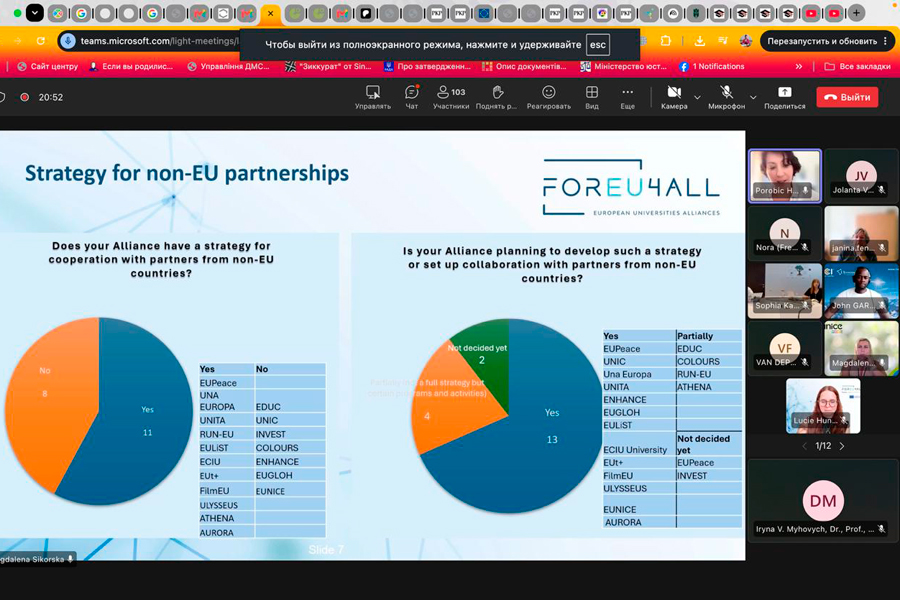
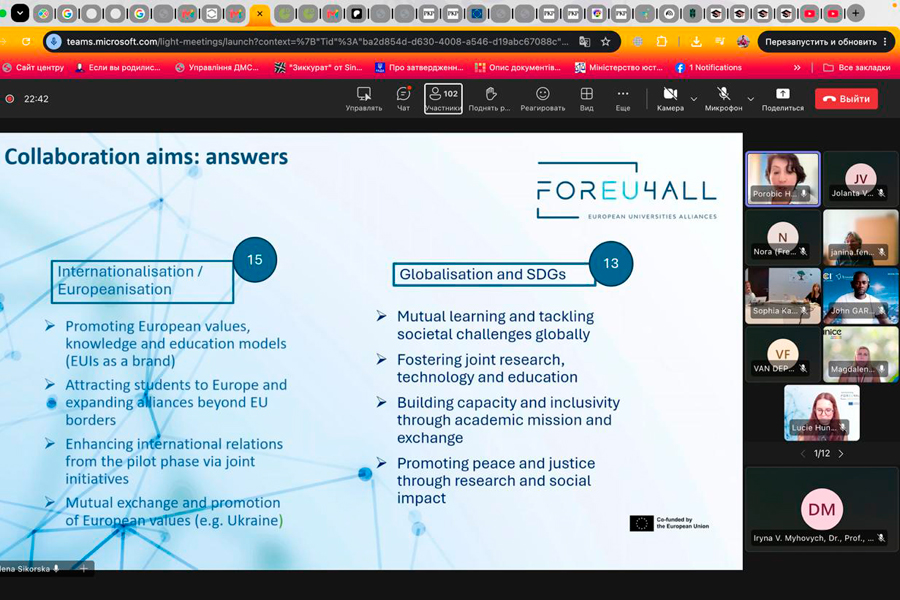
Під час заходу було представлено результати дослідження геополітичних стратегій європейських університетських альянсів, які презентували Магдалена Сікорська (EUNICE European University) та професорка Сельма Поробіч (Young Universities for the Future of Europe). Доповідачі акцентували увагу на ролі альянсів як платформ для розвитку міжнародної співпраці, реалізації спільних освітніх програм, дослідницьких проєктів, академічної мобільності та заходів із розбудови потенціалу.
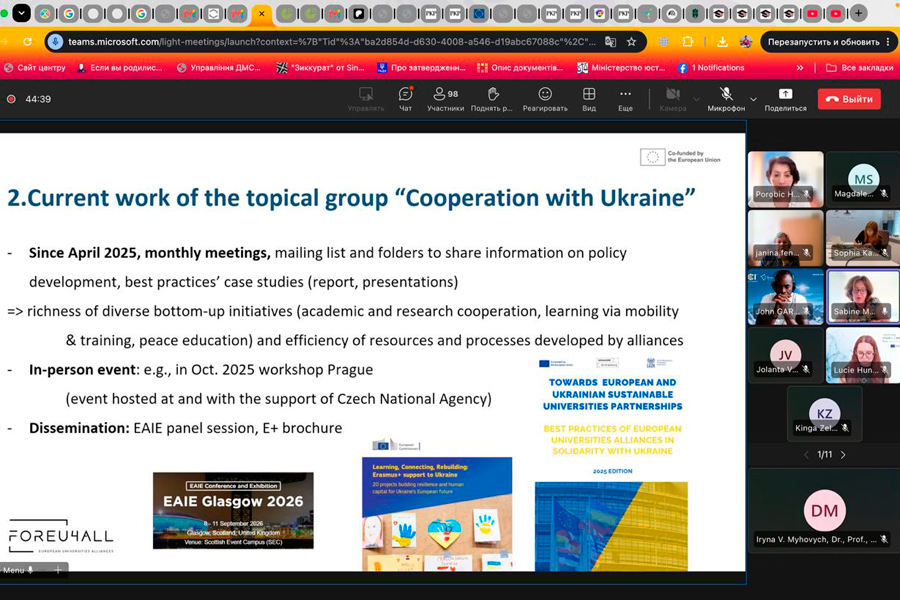
Окремий блок був присвячений співпраці європейських університетських альянсів з Україною. Учасники відзначили, що з початку повномасштабного вторгнення більшість закладів вищої освіти Європи реалізували ініціативи солідарності на підтримку українських студентів і науково-педагогічних працівників, а понад 50 університетських альянсів уже формалізували співпрацю з українськими закладами вищої освіти. Також було представлено діяльність тематичної групи «Cooperation with Ukraine», яка сприяє обміну кращими практиками та поширенню результатів співпраці.
У межах вебінару обговорили основні напрями міжнародної діяльності університетських альянсів, зокрема розвиток спільних освітніх програм, дослідницької співпраці, академічної мобільності, інноваційної діяльності та заходів із розбудови потенціалу. Доповідачі наголосили на важливості посилення міжнародного виміру програми Erasmus+, розширення можливостей участі партнерів із третіх країн та вдосконалення механізмів фінансування міжнародної співпраці.
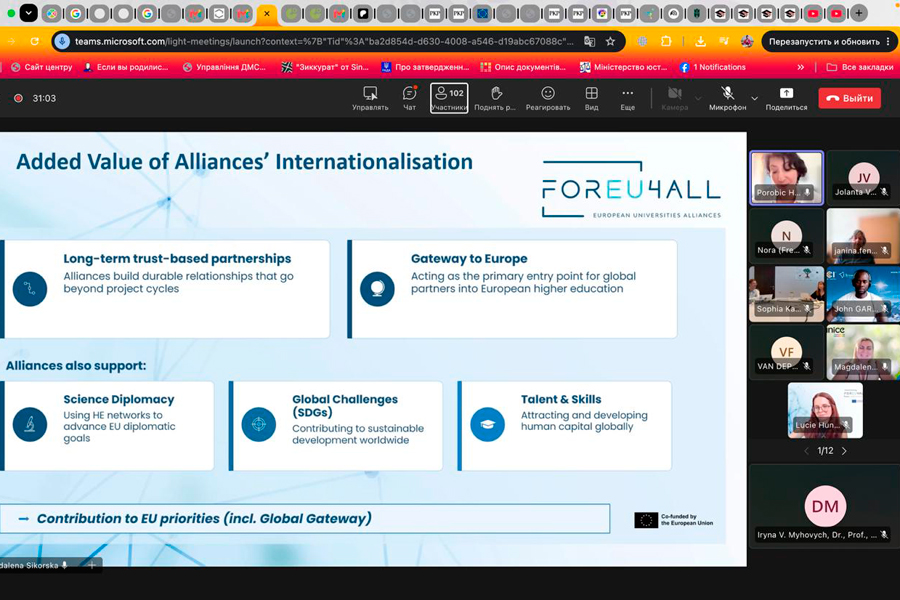
Учасники також окреслили ключові виклики, серед яких недостатнє фінансування глобального виміру діяльності університетських альянсів, фрагментарність європейських інструментів підтримки, адміністративні бар’єри та обмежені можливості інтеграції партнерів з-поза Європейського Союзу. Серед пріоритетів подальшого розвитку було визначено посилення ролі університетських альянсів як стратегічних глобальних акторів, розширення міжнародного партнерства та забезпечення більш активної участі університетів із країн-партнерів у реалізації спільних ініціатив.
Участь у заході сприяла розширенню міжнародних зв’язків, ознайомленню з актуальними тенденціями розвитку Європейського простору вищої освіти та пошуку нових можливостей для співпраці з європейськими університетськими альянсами. Залучення до професійних дискусій щодо міжнародного партнерства та підтримки України дозволяє нашому університету зміцнювати свою присутність у міжнародному академічному середовищі та розвивати нові напрями освітньої, наукової та проєктної взаємодії.
За інформацією відділу міжнародних зв’язків
Participation in the FOREU4ALL Policy Learning Lab Online Event
The University joined the FOREU4ALL Policy Learning Lab event entitled *“Alliances Without Borders, Connecting European Values with Regional and Global Engagement.”
On 17 June, Iryna V. MYHOVYCH, Acting Vice-Rector for Scientific and Pedagogical Work and Head of the International Relations Office, participated in the FOREU4ALL Policy Learning Lab Launch Webinar “Alliances Without Borders, Connecting European Values with Regional and Global Engagement,” organised within the framework of the FOREU4ALL European Universities Alliance.
During the event, the results of a study on the geopolitical strategies of European university alliances were presented by Magdalena Sikorska (EUNICE European University) and Professor Selma Porobić (Young Universities for the Future of Europe). The speakers highlighted the role of alliances as platforms for fostering international cooperation, implementing joint educational programmes, research projects, academic mobility, and capacity-building activities.
A separate session focused on cooperation between European university alliances and Ukraine. Participants noted that since the beginning of the full-scale invasion, most European higher education institutions have launched solidarity initiatives to support Ukrainian students and academic staff, while more than 50 university alliances have already formalised cooperation with Ukrainian higher education institutions. The activities of the “Cooperation with Ukraine” thematic group, which facilitates the exchange of best practices and the dissemination of cooperation outcomes, were also presented.
The webinar also addressed the key areas of international activities carried out by university alliances, including the development of joint educational programmes, research cooperation, academic mobility, innovation activities, and capacity-building initiatives. The speakers emphasised the importance of strengthening the international dimension of Erasmus+, expanding opportunities for the participation of third-country partners, and improving mechanisms for financing international cooperation.
Participants also outlined major challenges, including insufficient funding for the global dimension of university alliances, fragmentation of European support instruments, administrative barriers, and limited opportunities for integrating partners from outside the European Union. Among the priorities for future development, they identified strengthening the role of university alliances as strategic global actors, expanding international partnerships, and ensuring more active participation of universities from partner countries in joint initiatives.
Participation in the event contributed to strengthening international ties, increasing awareness of current trends in the development of the European Higher Education Area, and exploring new opportunities for cooperation with European university alliances. Engagement in professional discussions on international partnerships and support for Ukraine enables the University to enhance its presence in the international academic community and to develop new avenues for educational, research, and project-based cooperation.
According to the information provided by the International Relations Office.