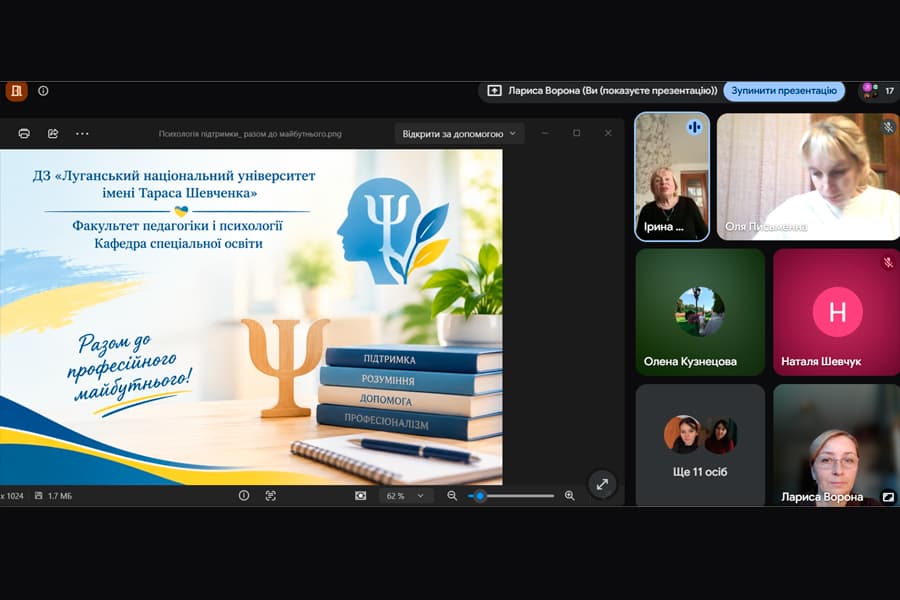
Гостьова лекція на кафедрі іноземних мов
З доповіддю виступила Соловйова Тетяна Олександрівна, доктор філософії з філології, доцент кафедри англійської філології Карпатського національного університету імені Василя Стефаника. До кола її наукових інтересів належать політична лінгвістика, психолінгвістика, когнітивна лінгвістика, прецедентні феномени, політичний дискурс.
Тема є надзвичайно актуальною в сучасному світі, адже політична лінгвістика допомагає побачити, що слово здатне не лише інформувати, але й переконувати, мобілізувати, вводити в оману та змінювати хід подій. Саме тому здатність аналізувати політичну мову є важливою навичкою сучасної людини.
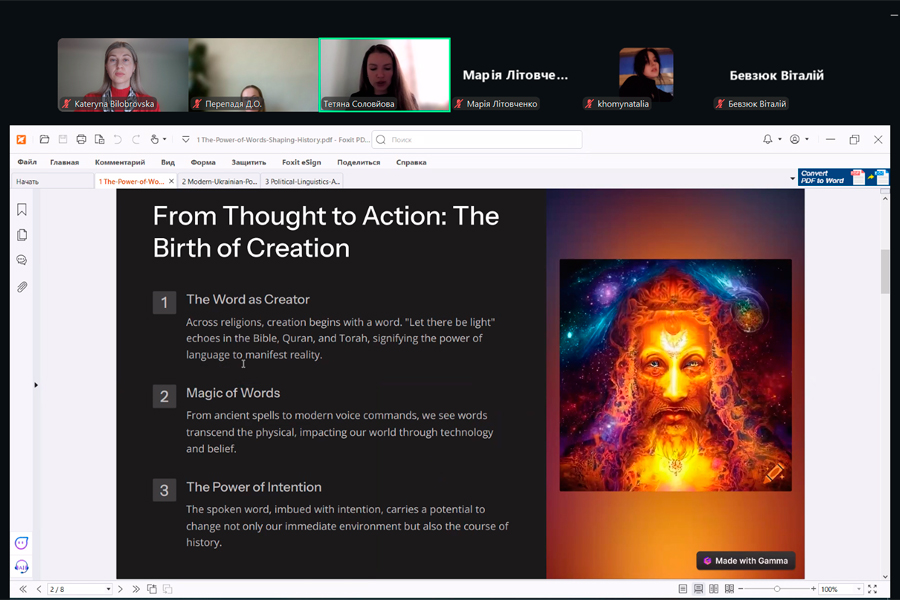

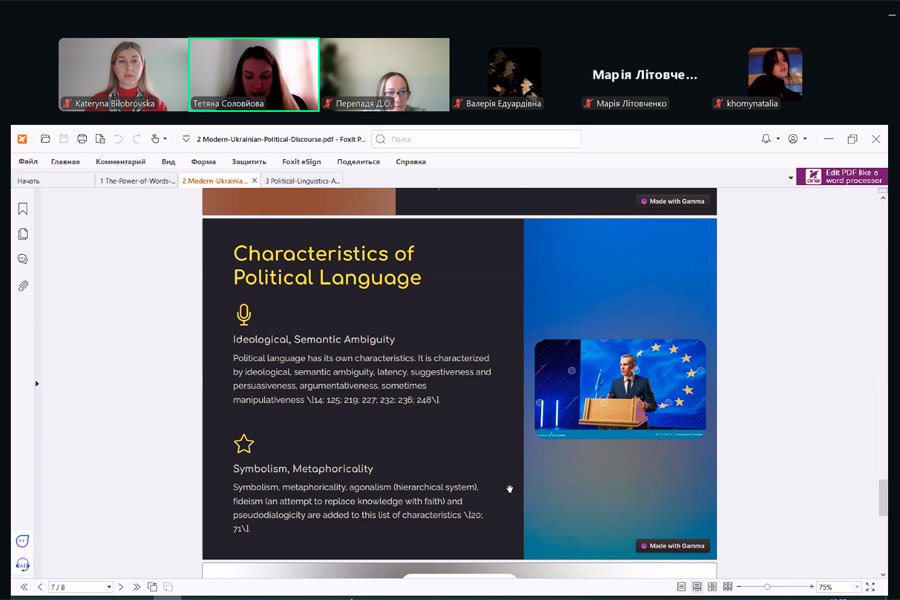
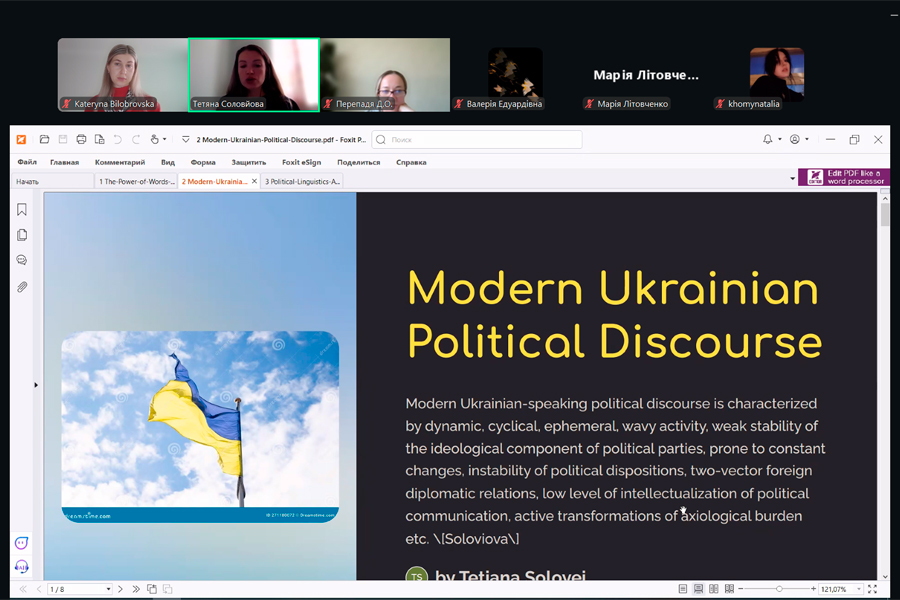
Під час лекції учасники розглянули історію формування і структуру слів, які впливають на реципієнтів; як мова стає інструментом політичного впливу; які лінгвістичні прийоми використовують у публічних виступах, дебатах і медіа та як розпізнавати маніпулятивні мовні стратегії. На прикладах реальних політичних виступів лекторка показала, як добір лексики, метафори, повтори та емоційно забарвлені формулювання впливають на сприйняття інформації аудиторією. Окрему увагу було приділено особливостям політичного дискурсу в Україні, його структурі. Захід відбувся в інтерактивному форматі – із залученням аудиторії: учасники разом аналізували фрагменти політичних виступів.
Тема зустрічі стала в пригоді усім, хто цікавиться питаннями мови, комунікацій і критичного мислення, адже аналіз політичної мови є важливим професійним інструментом, а для кожного громадянина це навичка, що допомагає свідомо сприймати інформацію.
Кафедра іноземних мов висловлює щиру вдячність Соловйовій Т. О. за змістовну та динамічну зустріч, обмін професійним досвідом і вагомий внесок у розвиток практичних компетентностей майбутніх філологів і знавців іноземних мов. Подібні зустрічі сприяють розвитку критичного мислення та медіаграмотності молоді.
Кафедра іноземних мов,
Факультет соціальних і гуманітарних наук
Guest lecture at the Department of Foreign Languages
On November 23, 2026, a guest lecture was held at the Department of Foreign Languages for students of the first (bachelor’s) and second (master’s) levels of higher education on the topic: “Political linguistics: the power of word”. The report was delivered by Soloviova Tetiana Oleksandrivna – Ph.D in Philology, Associate Professor of the Department of English Philology of Vasyl Stefanyk Carpathian National University. Her research interests include political linguistics, psycholinguistics, cognitive linguistics, precedent phenomena, and political discourse.
This topic is extremely relevant in the modern world, as political linguistics reveals that words can do more than just convey information – they can persuade, mobilize, mislead, and alter the course of events. That is why the ability to analyze political language is an important skill for a modern person.
During the lecture, participants explored the origins and structure of words that influence recipients, examined how language serves as a tool for political influence, identified linguistic techniques used in public speaking, debates, and the media, and learned how to recognize manipulative linguistic strategies. Using examples of real political speeches, the lecturer showed how vocabulary selection, metaphors, repetitions, and emotionally charged formulations affect the audience's perception of information. Special attention was given to the specific characteristics and structure of political discourse in Ukraine. The event was held in an interactive format - with audience involvement: participants analyzed fragments of political speeches together.
The topic of the meeting was useful for everyone interested in issues of language, communications, and critical thinking, because the analysis of political language is an important professional tool, and for every citizen it is a skill that helps to consciously perceive information.
The Department of Foreign Languages expresses its sincere gratitude to Soloviova T. O. for the meaningful and dynamic meeting, exchange of professional experience, and significant contribution to the development of practical competencies of future philologists and foreign language specialists. Such meetings contribute to the development of critical thinking and media literacy among young people.
Foreign Languages Department,
Faculty of Social Sciences and Humanities