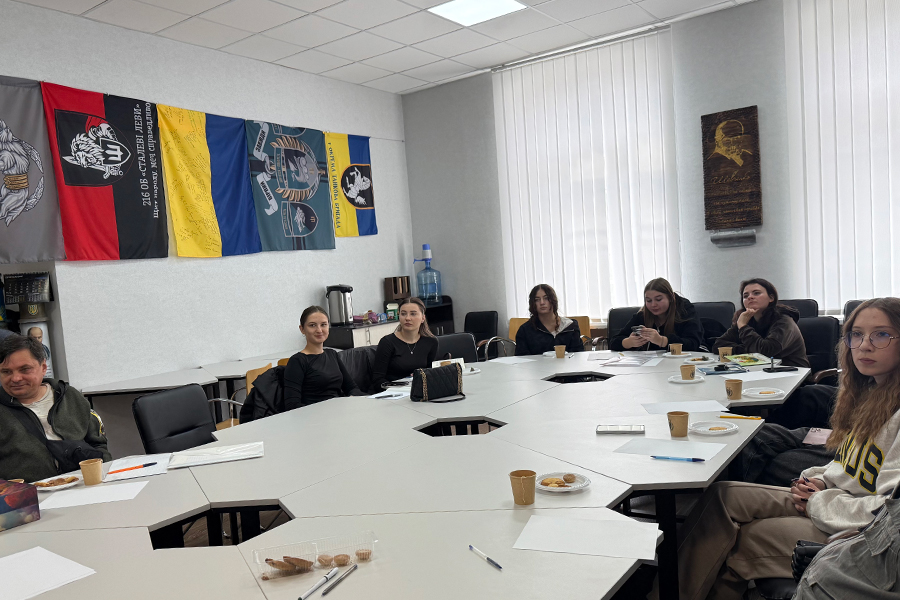
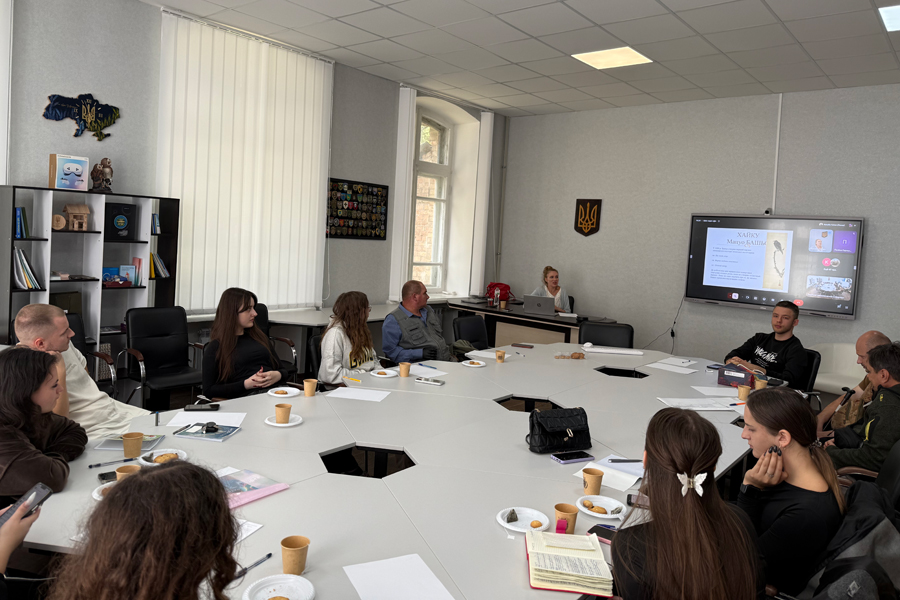
У Лубнах відбувся відкритий воркшоп-тренінг із написання хайку
Захід був присвячений практичному опануванню основ створення хайку – традиційної японської поетичної форми, що вирізняється лаконізмом, увагою до конкретної деталі та здатністю передавати значний емоційний і смисловий зміст через кілька образів.
На відміну від звичайного теоретичного заняття, воркшоп передбачав активну участь студентів на кожному етапі роботи. Учасники не лише дізнавалися про особливості японської поезії, а й одразу випробовували запропоновані прийоми на практиці: спостерігали, фіксували побачене, добирали образи, створювали власні тексти та редагували їх.
Робота розпочалася з простого завдання – протягом кількох секунд уважно подивитися навколо й зафіксувати те, що можна побачити, почути або відчути. Це могли бути сонячний промінь на підвіконні, шум за вікном, мокрий асфальт, тінь дерева, звук кроків чи рух фіранки. Саме з таких, на перший погляд, непомітних деталей учасники починали створювати свої перші поетичні образи.
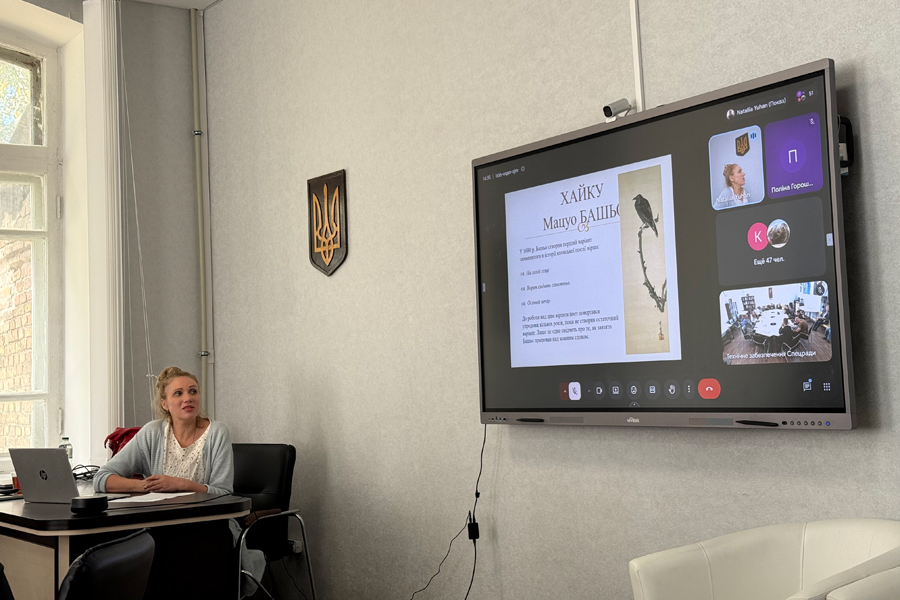
Під час тренінгу студенти ознайомилися з основними рисами традиційного японського хайку: тричастинною композицією, сезонним образом кіґо та композиційною паузою або переломом – кіре. Водночас особливу увагу було приділено можливості творчо адаптувати цю форму до українського культурного досвіду.
Одним із ключових завдань стала вправа «Не називай!». Студенти вчилися передавати такі поняття, як сум, самотність, любов, страх чи осінь, не називаючи їх безпосередньо. Замість пояснення емоції потрібно було знайти конкретну ситуацію або предмет, через який читач зможе її відчути.
Важливою частиною воркшопу стало «полювання на момент». Учасники шукали навколо себе невеликі, але виразні ситуації: листок, що прилип до черевика, відображення неба в калюжі, самотню чашку на підвіконні, рух вітру або забутий на лавці шарф. Після цього вони вчилися перетворювати спостереження на поетичний матеріал.
Наступний етап передбачав концентрацію образу. Із цілого спостереження студенти вибирали лише кілька ключових слів і визначали, що між ними відбувається. Для побудови композиції використовувалася також техніка «двох кадрів», коли перші образи створюють певну ситуацію, а останній рядок додає несподівану деталь або змінює сприйняття попереднього.
Окрему увагу було приділено українським сезонним образам. Калина, вишні, стерня, чорнозем, туман над річкою, перший сніг, осінній вітер та інші реалії українського культурного простору можуть ставати основою хайку, надаючи традиційній поетичній формі національного звучання.
Не менш важливим етапом стала робота з уже написаним текстом. Під час вправи «Викинь половину» студенти скорочували свої хайку, вилучаючи слова, які не несуть додаткового образного навантаження. Така практика допомогла усвідомити, що лаконічність — одна з головних художніх особливостей хайку, а кожне слово має бути необхідним.
Під час фінального завдання учасники створили власні хайку на три тематичні напрями: «Природа», «Людина» та «Український простір». У поетичних спробах з’явилися образи дому, дороги, вокзалу, поля, міста, пам’яті, зустрічі та очікування.
Завершальним етапом воркшопу стала рефлексія. Студенти обговорили, що виявилося найскладнішим у роботі над хайку, як змінюється текст після вилучення зайвих слів і чи можливо передати сильне почуття, не називаючи його прямо.
Підсумовуючи роботу, професор Наталія Леонідівна Юган наголосила, що хайку – це мистецтво уважного спостереження та вміння побачити значне у звичайному. Три рядки можуть бути достатніми для створення цілісного образу, якщо в них залишається лише найважливіше.
Відкритий воркшоп-тренінг став для учасників можливістю не лише познайомитися з японською поетичною традицією, а й спробувати власні сили у творчому письмі, розвинути образне мислення та навчитися уважніше помічати поетичний потенціал навколишнього світу.
Open Haiku Writing Workshop Held in Lubny
On 22 September 2026, an open workshop entitled “How to Write Haiku: From Observation to Three Lines” was held in Lubny. The workshop was conducted by Doctor of Philology and Professor Nataliia Leonidivna Yuhan, Professor of the Department of Literary Studies and Professor of the Department of Foreign Languages at the State Institution “Luhansk Taras Shevchenko National University.”
The event focused on the practical exploration of the fundamentals of haiku writing – a traditional Japanese poetic form distinguished by its conciseness, attention to concrete detail, and ability to convey significant emotional and semantic content through a few carefully selected images.
Unlike a conventional theoretical class, the workshop involved active student participation at every stage of the process. Participants not only learned about the distinctive features of Japanese poetry but also immediately put the suggested techniques into practice: they observed, recorded what they noticed, selected images, created their own texts, and edited them.
The workshop began with a simple task: participants were asked to look carefully around them for several seconds and record something they could see, hear, or feel. It might be a ray of sunlight on a windowsill, a sound outside the window, wet asphalt, the shadow of a tree, the sound of footsteps, or the movement of a curtain. It was from such seemingly insignificant details that participants began creating their first poetic images.
During the workshop, students were introduced to the main features of traditional Japanese haiku: its three-part structure, the seasonal reference known as kigo, and the structural pause or shift known as kire. At the same time, particular attention was given to the possibility of creatively adapting this poetic form to Ukrainian cultural experience.
One of the key activities was the “Don’t Name It!” exercise. Students learned to convey such concepts as sadness, loneliness, love, fear, or autumn without naming them directly. Instead of explaining an emotion, they had to find a specific situation or object through which the reader could experience it.
Another important part of the workshop was “Hunting for a Moment.” Participants looked for small yet expressive situations around them: a leaf stuck to a shoe, the reflection of the sky in a puddle, a lonely cup on a windowsill, the movement of the wind, or a scarf left behind on a bench. They then learned how to transform these observations into poetic material.
The next stage focused on concentrating the image. From an entire observation, students selected only a few key words and identified what was happening between them. The “two frames” technique was also used to construct the composition: the first images create a particular situation, while the final line introduces an unexpected detail or changes the way the preceding images are perceived.
Special attention was given to Ukrainian seasonal imagery. Viburnum, cherry trees, stubble fields, black soil, mist over a river, the first snow, autumn wind, and other elements of the Ukrainian cultural landscape can serve as the basis for haiku, giving the traditional poetic form a distinctly Ukrainian resonance.
Working with the texts they had already written was another important stage of the workshop. During the “Cut It in Half” exercise, students shortened their haiku by removing words that did not contribute additional imagery. This practice helped them understand that conciseness is one of the defining artistic features of haiku and that every word should be necessary.
As a final task, participants created their own haiku in three thematic areas: “Nature,” “The Human Being,” and “Ukrainian Space.” Their poetic attempts included images of home, roads, railway stations, fields, cities, memory, encounters, and waiting.
The workshop concluded with a reflection session. Students discussed what they had found most challenging in writing haiku, how a text changes when unnecessary words are removed, and whether it is possible to convey a strong feeling without naming it directly.
Summing up the workshop, Professor Nataliia Leonidivna Yuhan emphasized that haiku is an art of attentive observation and of discovering significance in the ordinary. Three lines can be enough to create a complete image if they contain only what matters most.
The open workshop gave participants an opportunity not only to become acquainted with the Japanese poetic tradition but also to experiment with creative writing, develop their capacity for visual and imaginative thinking, and learn to notice the poetic potential of the world around them more attentively.