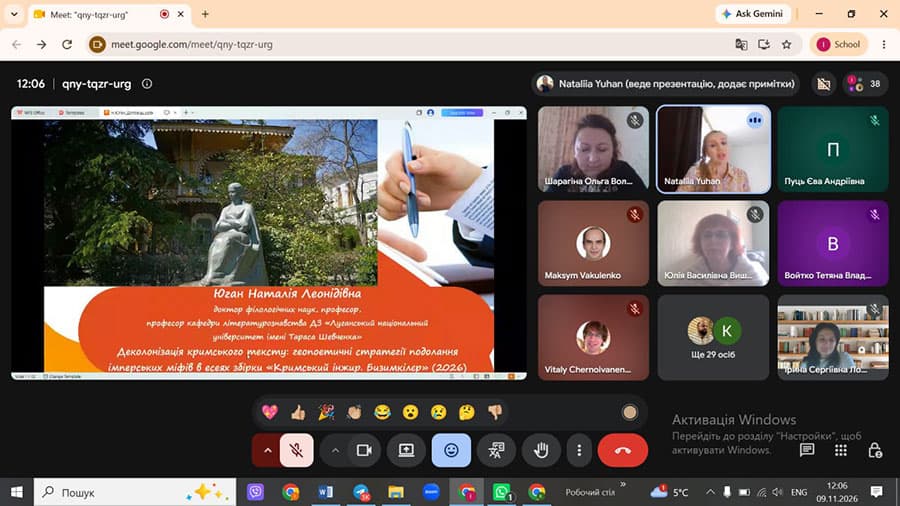
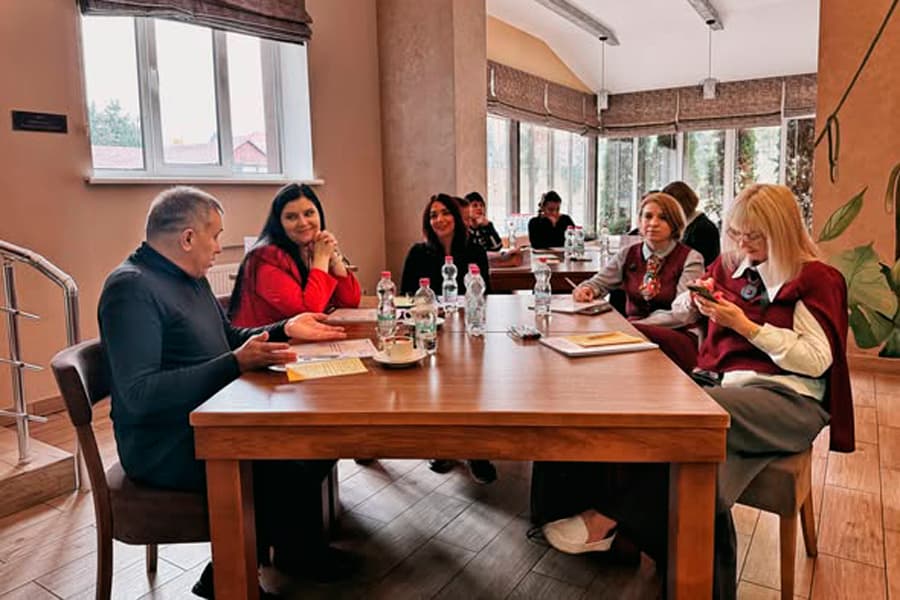
Meeting of the "Innovative Technologies for Teaching Geography" Study Group
The meeting brought together students, teachers, and - most valuably - alumni who are already working in schools. Their feedback was of particular importance to the presenters.
This session featured presentations by second-year master’s students specializing in Secondary Education (Geography), serving as a practical test of key concepts from their final qualification theses.
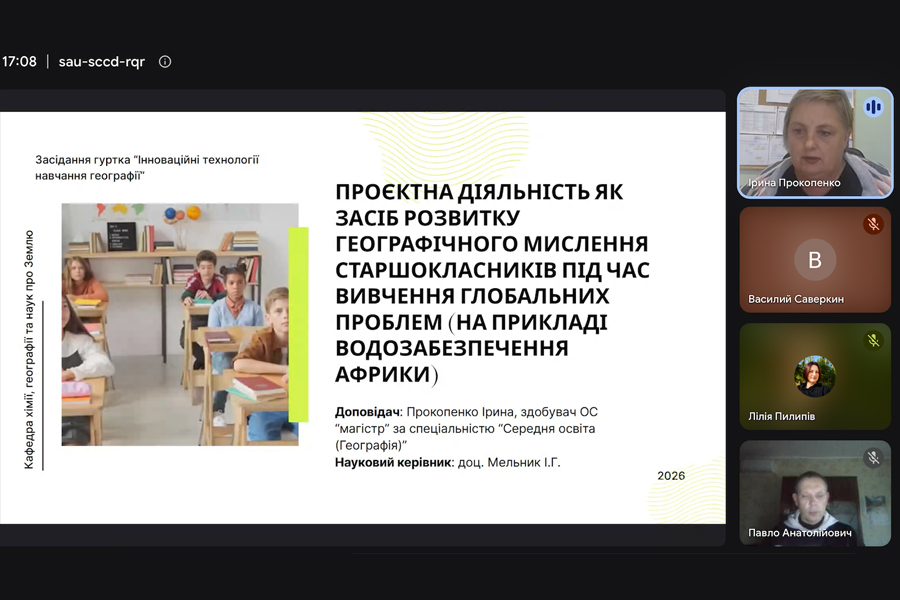
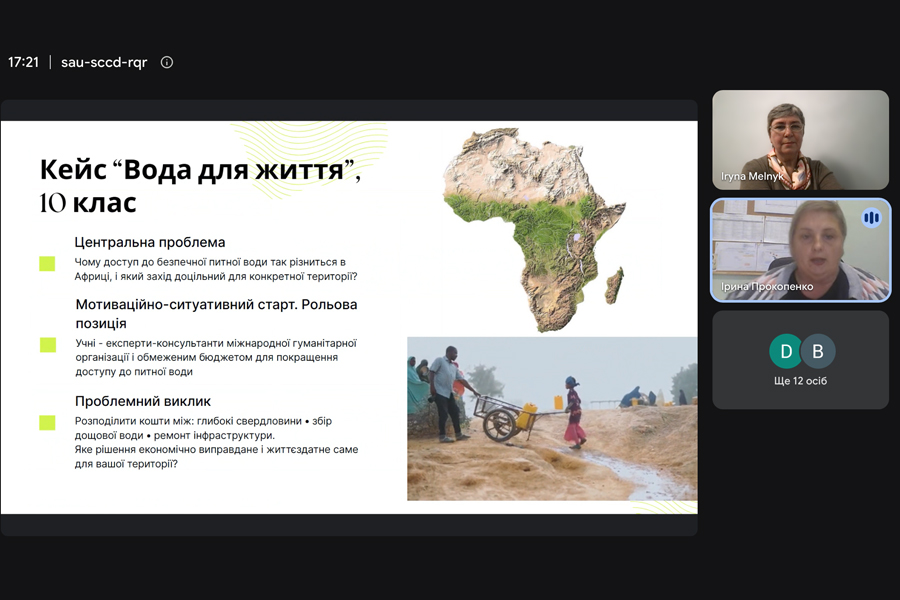
Iryna Prokopenko raised an issue that many sense but rarely articulate: school geography projects are all too easily reduced to a mere collection of facts paired with an attractive presentation. In the process, spatial analysis, the investigation of underlying causes, and the formulation of well-grounded solutions often get left out. She proposed a model that intentionally guides students through three stages of thinking: moving from the simple selection of information to spatial comparison, then to explaining causes, and finally to arriving at a reasoned solution.
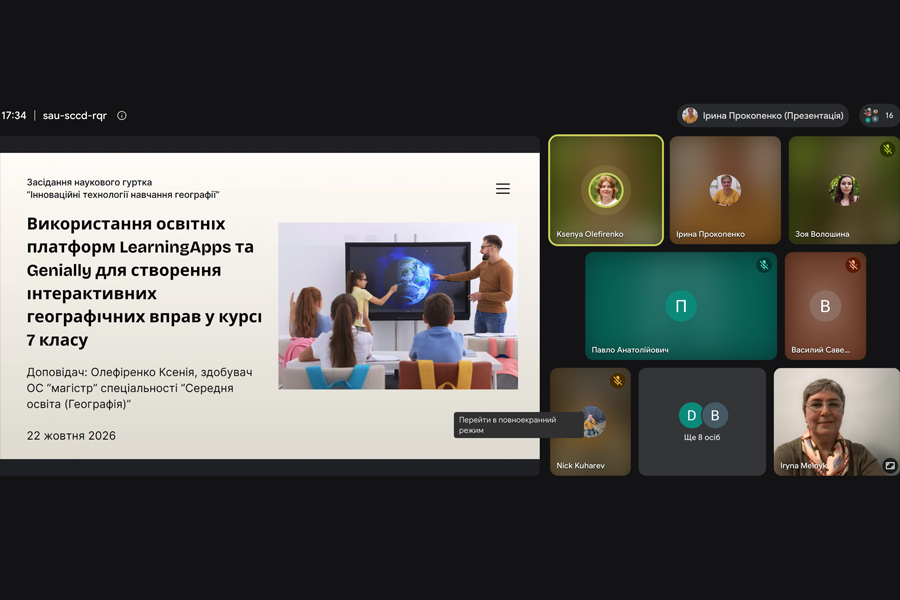
Kseniia Olefirenko demonstrated how standard 7th-grade exercises can be transformed into activities that truly excite students. Platforms like LearningApps and Genially offer more than just digital space; they provide a way to make lessons dynamic and personalized. When students actively manipulate objects, map out routes, or decipher maps, geography ceases to be a mere collection of facts and becomes a space for action.
A highlight of the session was the practical segment led by I. H. Melnyk, Associate Professor and head of the study group. She demonstrated how artificial intelligence tools can be used to create interactive exercises in the form of web-quests. It was less of a formal presentation and more of a hands-on training workshop.
Why are these topics particularly relevant today? Because schools are evolving faster than many can keep up with. Students are accustomed to interactivity and instant feedback - if a lesson lacks these elements, their attention is quickly lost. Project-based activities help cultivate a mindset that will prove valuable far beyond the geography classroom. Furthermore, artificial intelligence is no longer just a vision of the "future"; it is a tool available right now to make learning more engaging and effective.
The meeting was highly productive. The presentations were genuinely innovative, substantive, and constructive.
Department of Chemistry, Geography, and Earth Sciences