SKIF Discussion Club Explores the Legacy of Mykhailo Hrushevskyi on the 160th Anniversary of His Birth
The meeting was dedicated to the 160th anniversary of the birth of Mykhailo Hrushevsky and to issues related to the Ukrainian Revolution of 1917–1921.
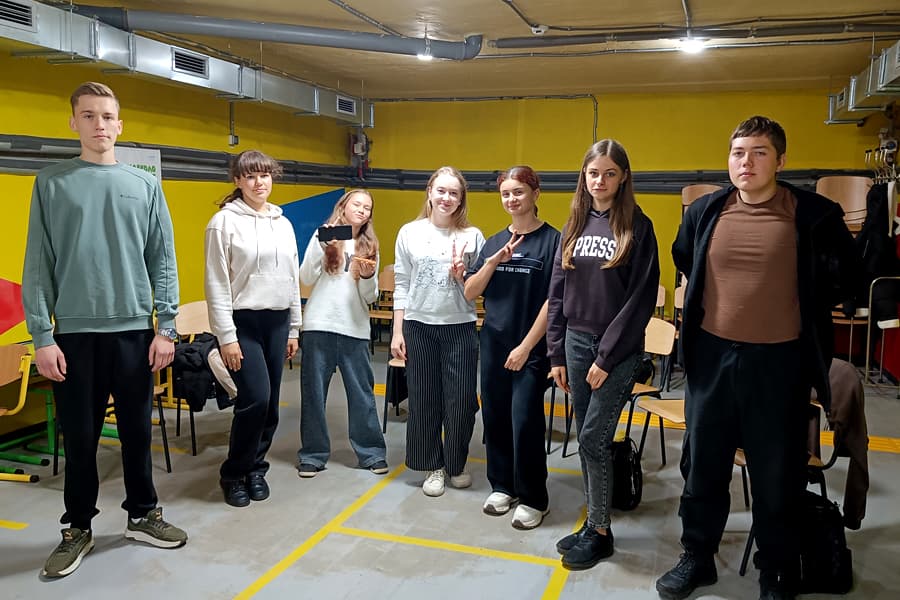
Traditionally, the core of the discussion club consists of students enrolled in the Secondary Education (History and Civic Education) programme at both the first (Bachelor’s) and second (Master’s) levels of higher education. At the same time, one of the club’s important achievements has been the expansion of its participant community.
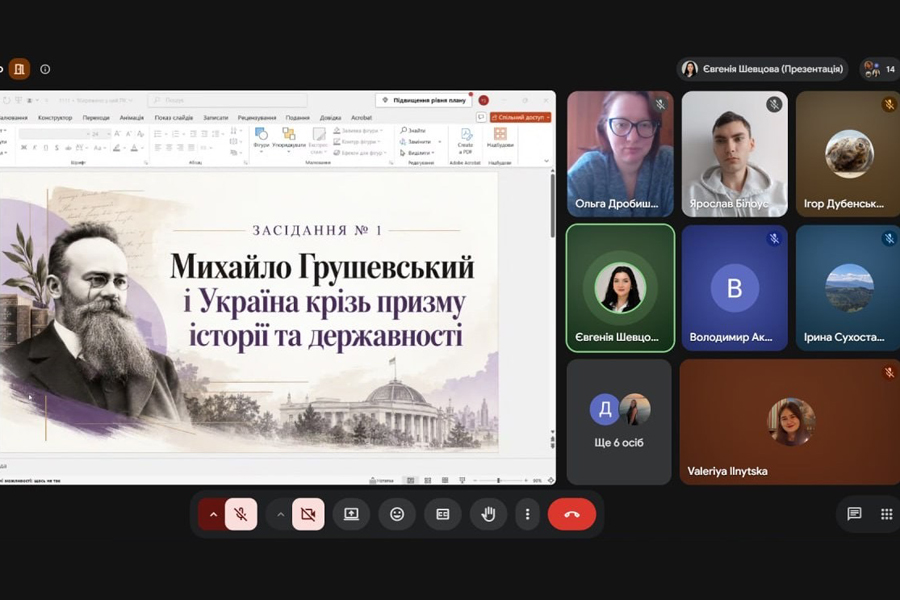
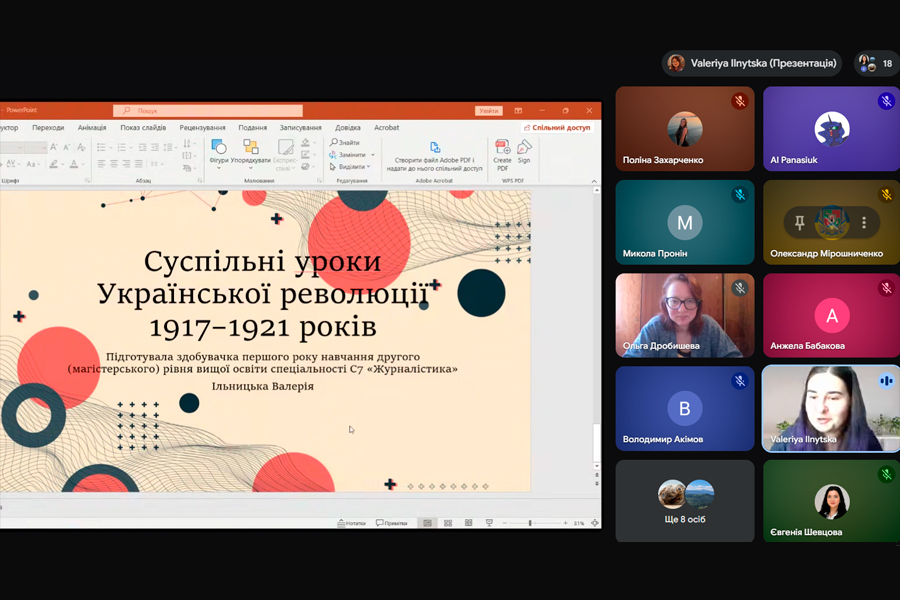
Students from other educational programmes of the Faculty of Social and Humanitarian Sciences also joined the meeting as participants and speakers, including students of International Relations, Political Science, Sociology, and representatives of philological programmes. This contributes to the interdisciplinary nature of the club’s work and creates opportunities for different academic and professional perspectives to be presented when discussing socially significant historical and scholarly issues.
The central issue of the first meeting was to identify the club’s priority areas of activity and approve its annual work plan. During the discussion, participants emphasised the importance of consistency and discipline in the club’s work, including regular meetings, thorough preparation of presentations, adherence to agreed organisational arrangements, respectful academic discussion, and responsible preparation of their own materials.
These requirements are viewed as an important part of developing students’ academic culture and preparing them for their future professional and research careers. The SKIF Discussion Club is primarily a form of extracurricular academic activity that complements the educational process and provides students with opportunities to work independently with scholarly and educational materials, prepare public presentations, substantiate their positions, and discuss challenging issues.
An important feature of the club is its openness to students from different educational programmes, which promotes interdisciplinary interaction and academic communication within the university community.
The meeting’s thematic agenda included seven presentations. Participants examined:
Mykhailo Hrushevsky’s life and controversial aspects of his biography;
the scholar’s concepts and historical views presented in History of Ukraine-Rus’;
the evolution of his political views from autonomy to Ukrainian independence;
the historical fate of the Ukrainian People’s Republic;
the development and social significance of culture during the Ukrainian Revolution of 1917–1921;
the social lessons of the revolutionary events.
The presentations were delivered by M. Pronin, M. Maslakov, O. Miroshnychenko, A. Panasiuk, P. Zakharchenko, and V. Ilnytska.
The decision to focus the first meeting of the new academic year on Mykhailo Hrushevskyi was prompted by the 160th anniversary of his birth. At the same time, the topic made it possible to explore not only the historian’s biography and scholarly legacy but also a broader range of issues related to Ukrainian state-building, political transformations, cultural processes, and the social experience of the Ukrainian Revolution of 1917–1921.
According to the approved plan, subsequent meetings of the SKIF Discussion Club will take place at the end of each month and will focus on current issues in Ukrainian scholarship, contemporary academic debates, and challenges facing the humanities. The meetings will provide students with opportunities to present their own papers and research, discuss challenging issues, and participate in scholarly debate.
The Department of History and Archaeology invites students from all educational programmes to take part in future meetings of the SKIF Discussion Club — both as active participants and presenters and as listeners.
According to the Department of History and Archaeology