Defense of Course Papers by Future Ecologists
The defense of course projects by third-year students of the 101 Ecology program took place at the Department of Landscape Gardening and Ecology of the Faculty of Natural and Agrarian Sciences. The event is an important component of the educational process and demonstrated the students’ high level of training, their interest in addressing contemporary environmental challenges, and their ability to conduct independent scientific research.
During the defense, students presented projects devoted to current issues of environmental protection and monitoring the condition of natural ecosystems. Among the research topics, particular attention was drawn to:
the structure and current state of forest ecosystems in the Donetsk and Luhansk regions;
satellite monitoring of the consequences of wildfires in the Luhansk region using modern Earth remote sensing methods;
the impact of tourism activities on the ecosystems of rural coastal areas, based on the case studies of the Teramo region (Italy) and the Kutsurub community (Ukraine);
assessment of air quality in industrial regions and analysis of the main factors contributing to anthropogenic pressure.
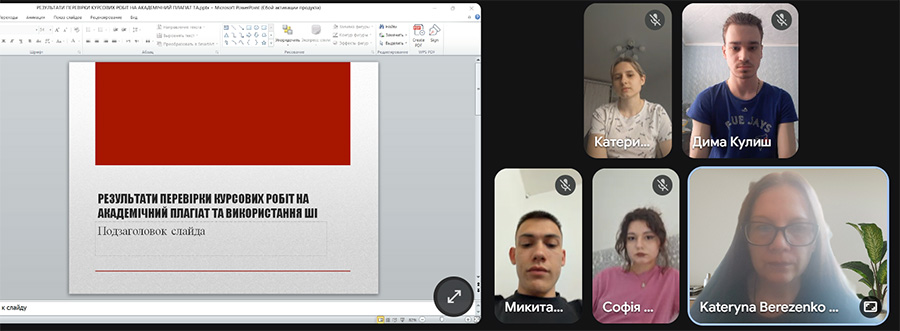
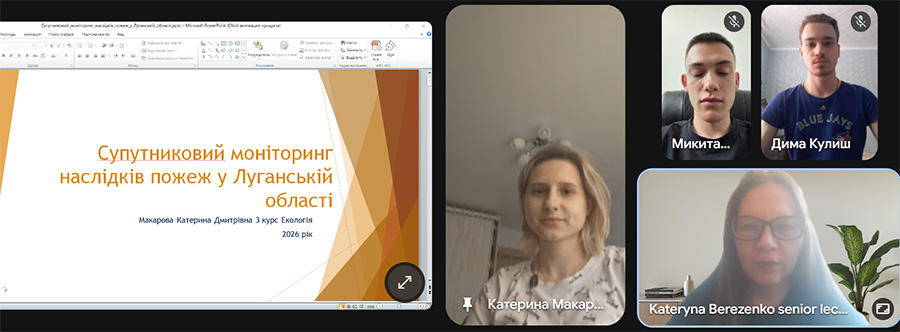
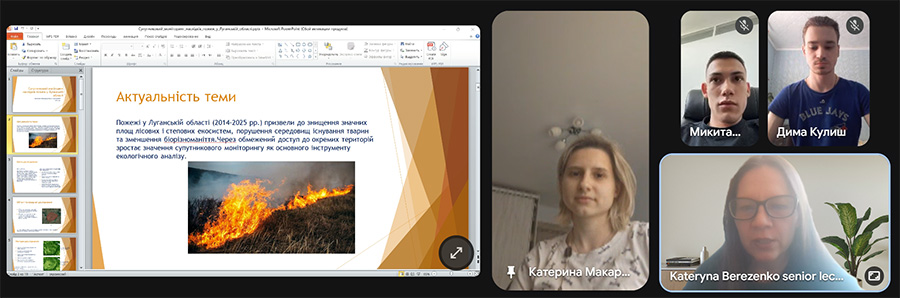
The students not only presented the results of their own research but also actively participated in scientific discussions. During the defense, they asked questions of their peers, provided well-reasoned comments on the presented findings, and exchanged ideas on possible ways to address the identified environmental challenges. This format contributed to the development of critical thinking, academic communication skills, and the ability to engage in professional discussions.
Following the completion of the defenses, special attention was devoted to discussing the prospects for the restoration of Ukraine’s natural ecosystems. The participants considered issues related to the restoration of forest plantations destroyed as a result of military actions, analyzed the potential of modern approaches to forest regeneration, and emphasized the importance of comprehensive environmental programs for the country’s post-war reconstruction.

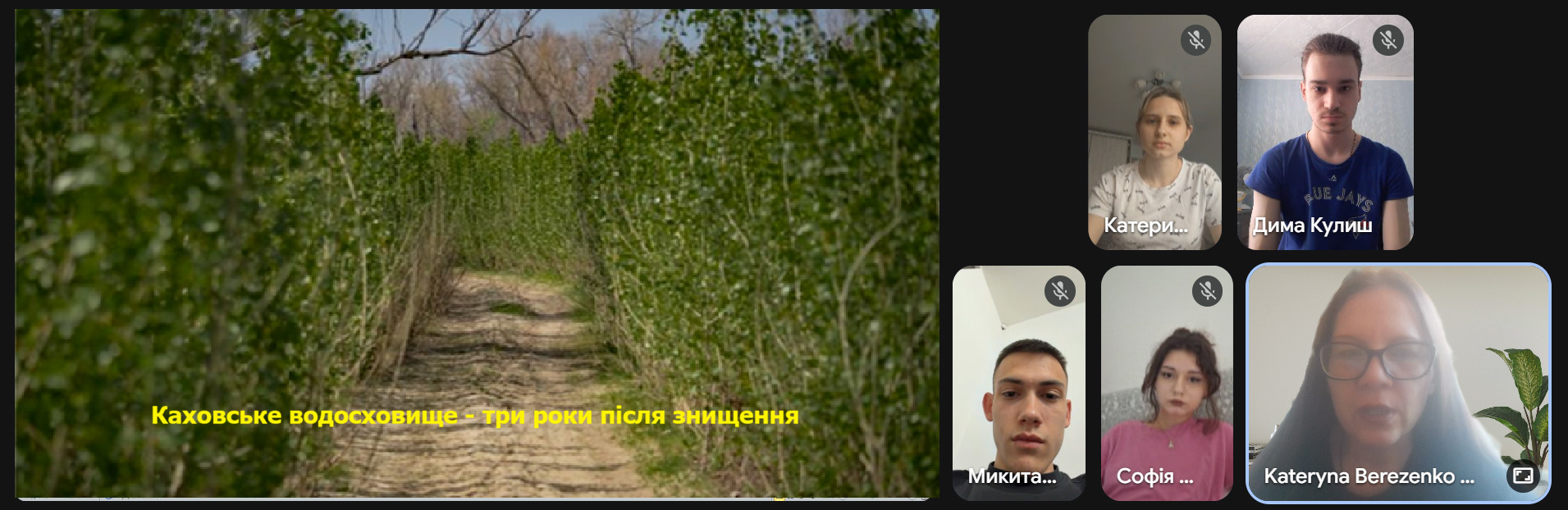
A lively discussion was also sparked by the issue of the formation of new vegetation cover in the territory of the former Kakhovka Reservoir. Students and academic staff considered the peculiarities of natural succession, the possibilities for biodiversity restoration, and the role of scientific monitoring in studying the changes taking place in these areas.
The defense of the course projects demonstrated the high level of interest of future ecologists in researching contemporary environmental challenges, their readiness to apply scientific methods of analysis, and their ability to propose practical approaches to environmental conservation and restoration.
We wish the students continued success in their studies, new scientific achievements, and professional growth!
Materials provided by the Department of Landscape Gardening and Ecology