Professor Nataliia Yuhan Delivers University-Wide Open Lecture in Lubny
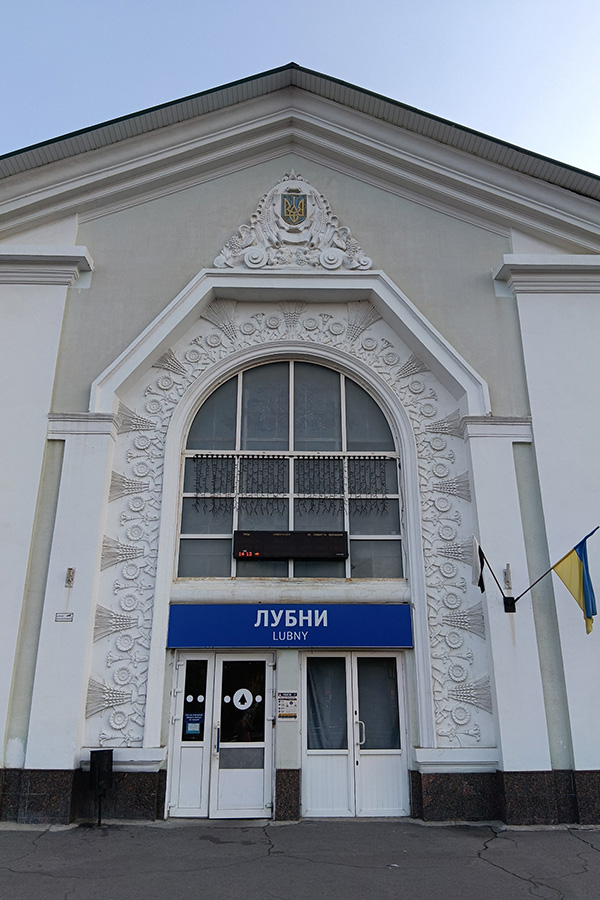
On 21 September 2026, Lubny hosted a university-wide open lecture delivered by Doctor of Philology and Professor Nataliia Leonidivna Yuhan, Professor of the Department of Foreign Languages at the State Institution “Luhansk Taras Shevchenko National University.” The lecture was entitled “The Female Body as a Space of Memory and Resistance: Trauma, War, and Postcolonial Experience in Contemporary English-Language and Ukrainian Poetry.”
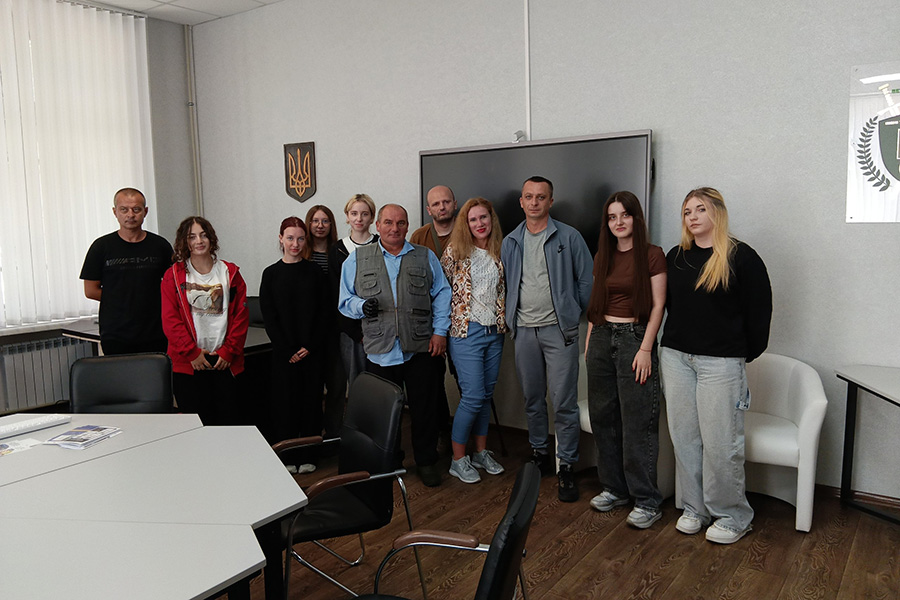
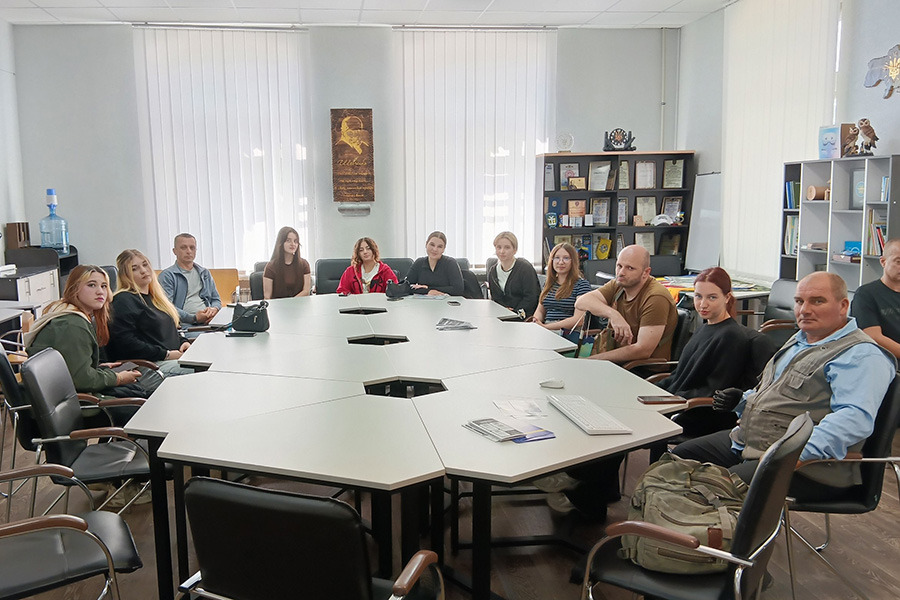
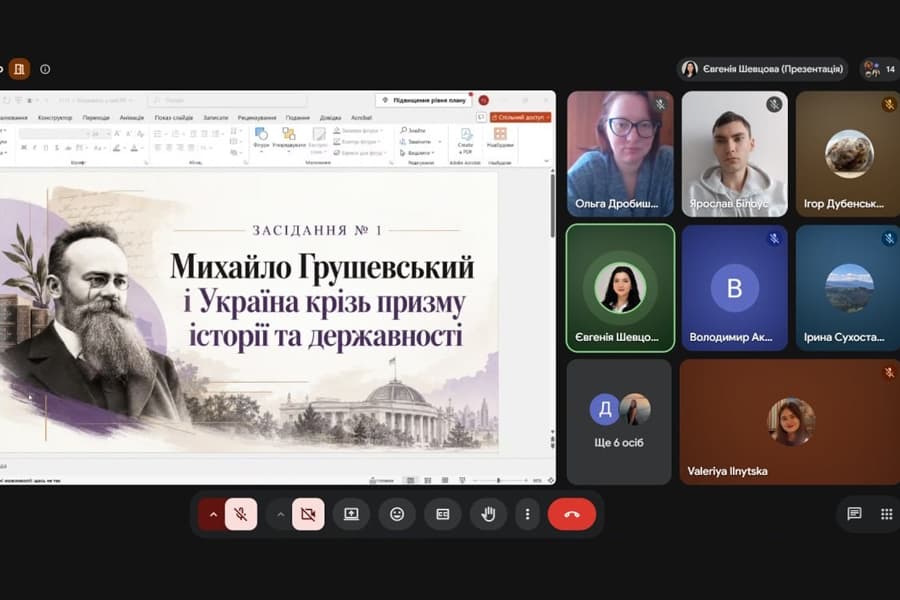
The event was held in a hybrid format, bringing together participants both in person and online and making it possible for faculty members and students from different locations to join the lecture. Faculty members of the Faculty of Social Sciences and Humanities, as well as undergraduate and graduate philology students and PhD students, actively participated in the event.
The lecture focused on the female body as a space of memory, the experience of trauma, and the formation of personal and collective identity. Nataliia Yuhan explored how, in contemporary poetry, the body can function as a kind of “archive” of lived experience, preserving memories of war, loss, forced displacement, home, cultural subordination, and the experiences of previous generations.
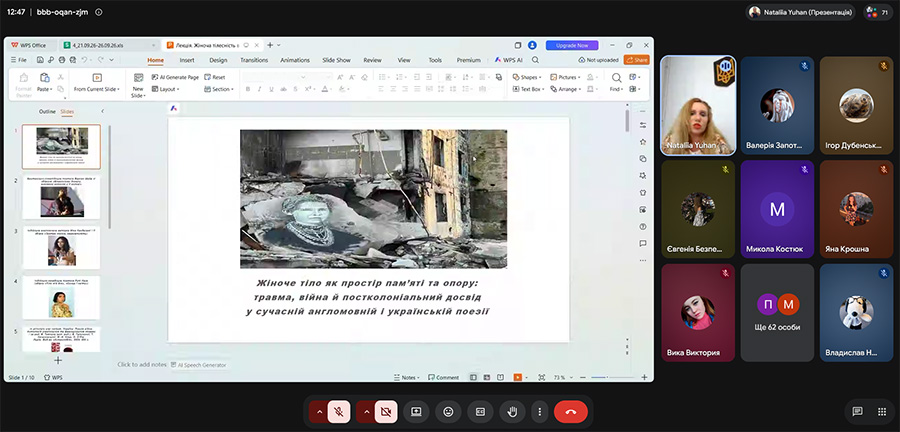

The lecturer examined the works of contemporary English-language and Ukrainian women poets, including Warsan Shire, Meena Kandasamy, Rupi Kaur, Yuliia Musakovska, Olena Huseinova, Mariana Zeleniuk, Iia Kiva, and other authors. Their poetry provided an opportunity to trace different forms of representing women’s experiences, from memories of war, migration, and the colonial past to intergenerational trauma, the loss of home, and transformations of female subjectivity.
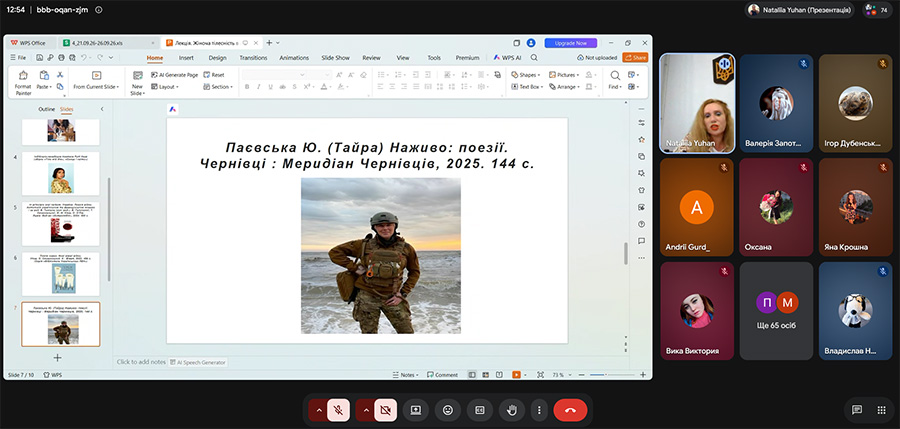
Particular attention was paid to the shift from representing women as objects of violence to portraying them as active subjects capable of remembering, bearing witness, resisting, and preserving their own voices. In this context, the poetry of Yuliia Paievska (Taira) was especially significant, presenting the female body as the body of a rescuer, servicewoman, witness, and fighter.
An important part of the lecture was a comparison of Ukrainian and English-language poetic experiences. While Ukrainian women poets largely address such issues as war, the loss of home, forced displacement, motherhood, and memory, English-language poetry often connects these themes with questions of colonial experience, racial discrimination, migration, and belonging. This comparative perspective makes it possible to identify common ways of representing trauma while also highlighting the distinctive features of different historical and cultural contexts.
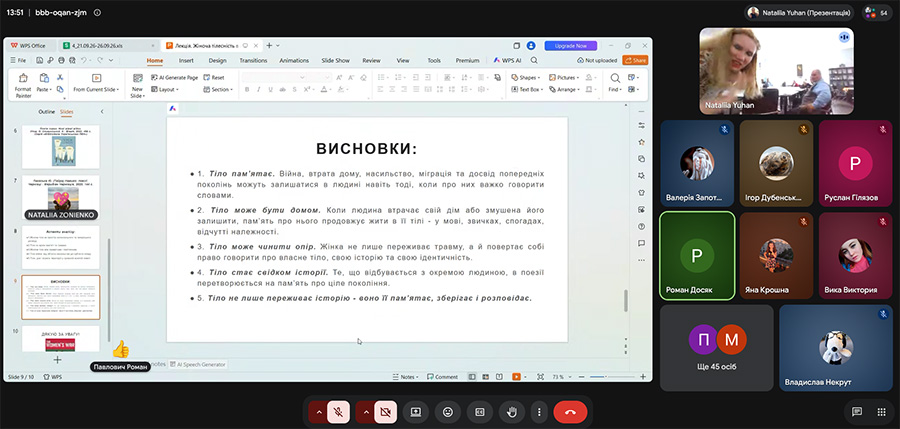
The lecture was interdisciplinary in nature, combining literary analysis with broader issues of memory, trauma, war, culture, and self-identification. It offered students and faculty members an opportunity to engage with important issues in contemporary poetry and to reflect on the role of literature in preserving personal and collective memory and in addressing psychological and collective intergenerational trauma.
University-wide open lectures held in Lubny are an important part of the University’s academic life. They create opportunities for scholarly dialogue, professional communication, and discussion of pressing issues in the contemporary humanities.
Department of Foreign Languages
Faculty of Social Sciences and Humanities