Open lecture by Nataliia Yuhan
On April 16, 2026, an open lecture was held by Doctor of Philological Sciences, Associate Professor of the Department of Literary Studies and Oriental Philology, Nataliia Leonidivna Yuhan, on the topic: “Haiku as a Universal Form of Aesthetic Practice of Poetic Self-Expression in Japanese Literature.”
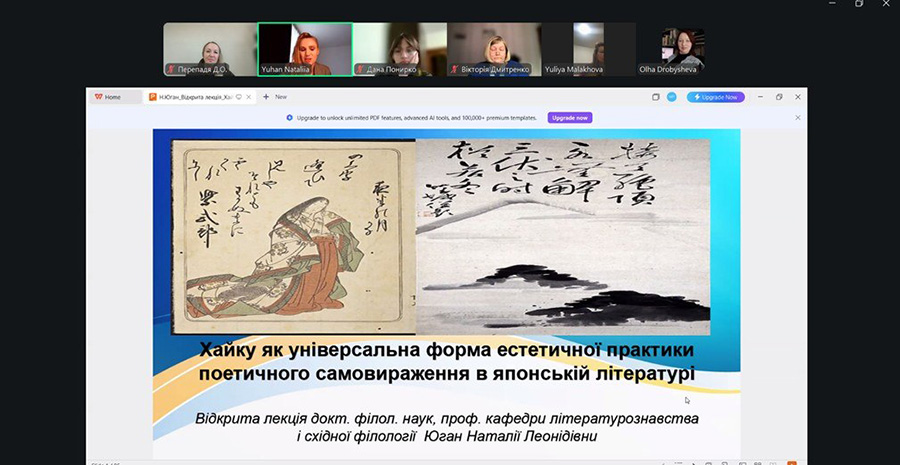
The event took place within the educational component “History of Japanese Literature” for second-year students of the first (bachelor’s) level of higher education enrolled in the educational program “Language and Literature (Japanese, English)” (Specialty 035.065 “Oriental Languages and Literatures (including Translation), primary language – Japanese”). The lecture brought together students, faculty members, as well as participants of the Youth Club of Eastern Cultures and all those interested in Japanese culture and Eastern poetics, becoming a significant academic event for the department.
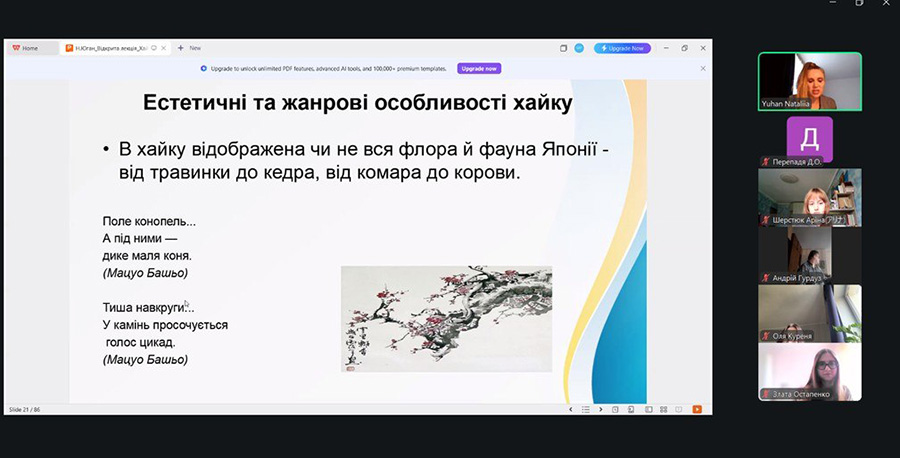
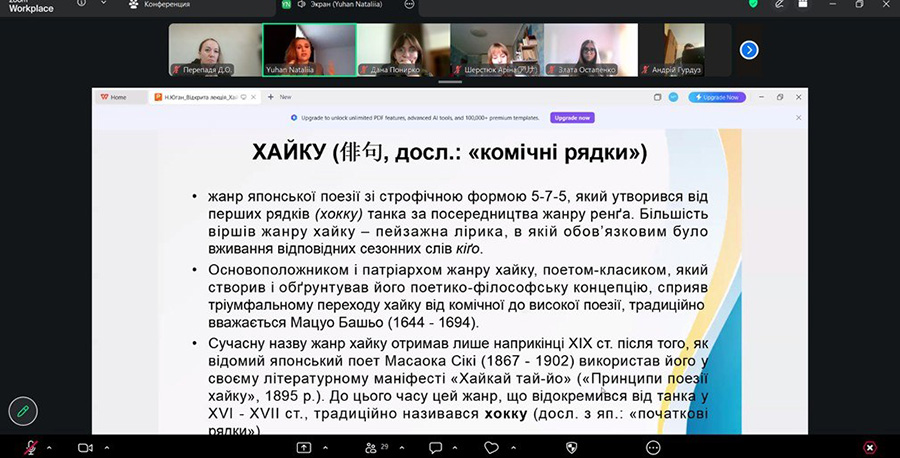
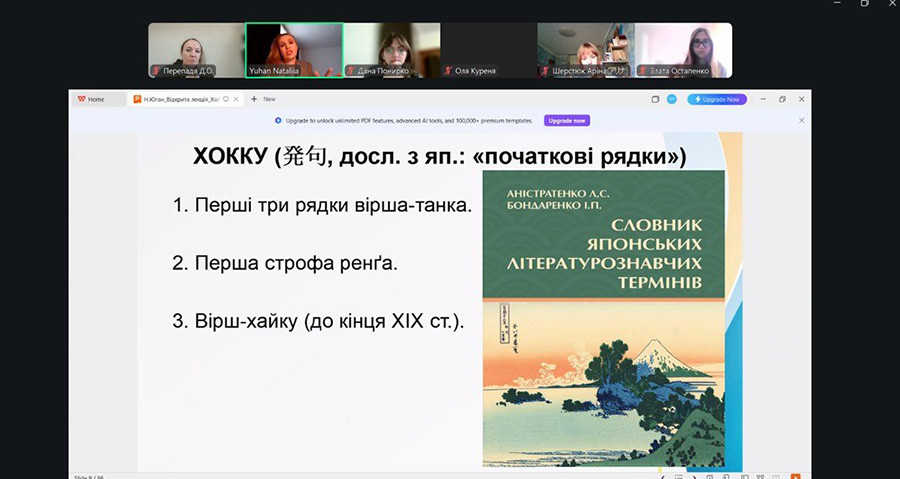
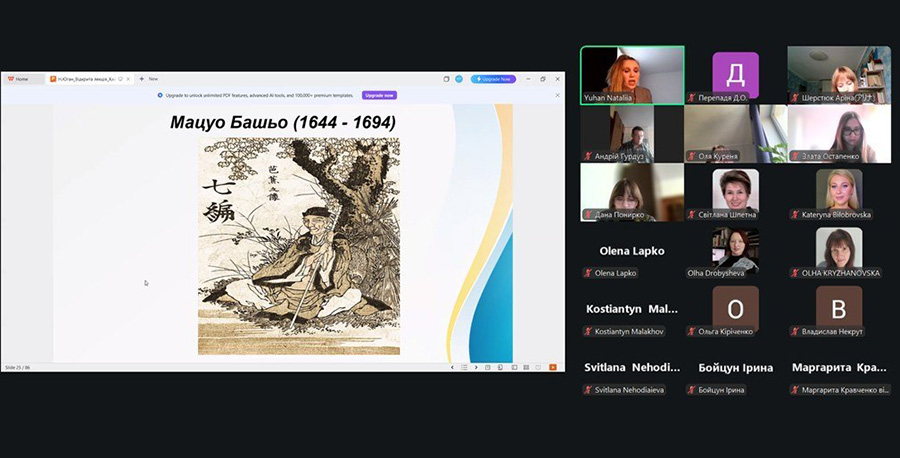
During the lecture, the historical prerequisites for the formation of haiku as an independent genre were thoroughly examined, including its genetic connection with the renga tradition and the transformation of the initial hokku tercet into a complete poetic form. Particular attention was paid to the role of classical authors in shaping the haiku canon, especially the work of Matsuo Bashō, in whose poetry this form acquired profound philosophical and aesthetic depth.
The lecture offered a comprehensive approach to the analysis of haiku as a multidimensional phenomenon. Its formal features were described in detail, including the 5–7–5 syllabic structure, the function of the seasonal word (kigo), and the role of the cutting word (kireji) as a meaning-generating element. At the same time, the lecturer emphasized that the essence of haiku cannot be reduced to a formal scheme, as its defining characteristics lie in the internal concentration of meaning, emotional intensity, and the ability to capture a moment as an existential experience.
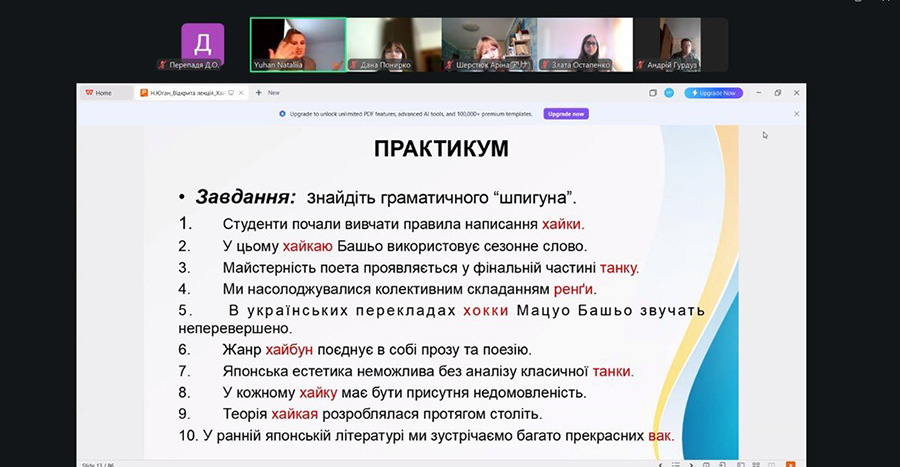
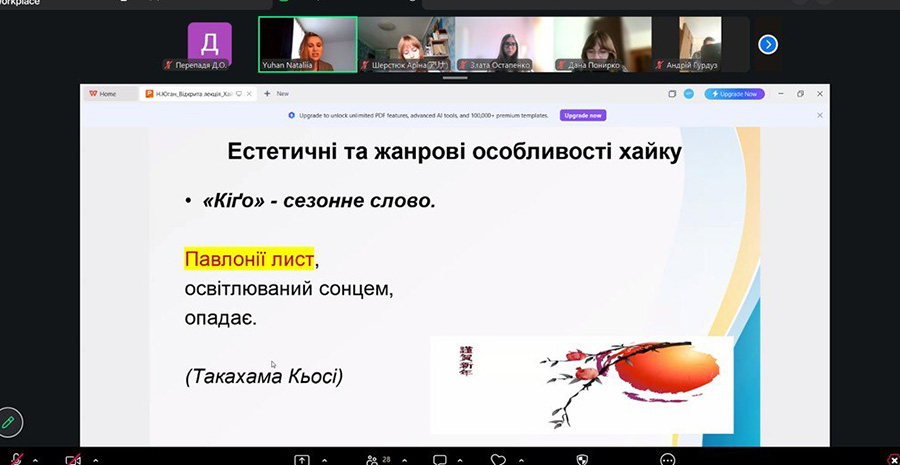
A separate part of the lecture was devoted to key aesthetic categories of Japanese culture—wabi, sabi, yūgen, and mono no aware—which shape a specific mode of artistic perception and sensitivity. Their interpretation provided a deeper understanding of haiku as an art of contemplation that combines simplicity of form with richness of inner content.
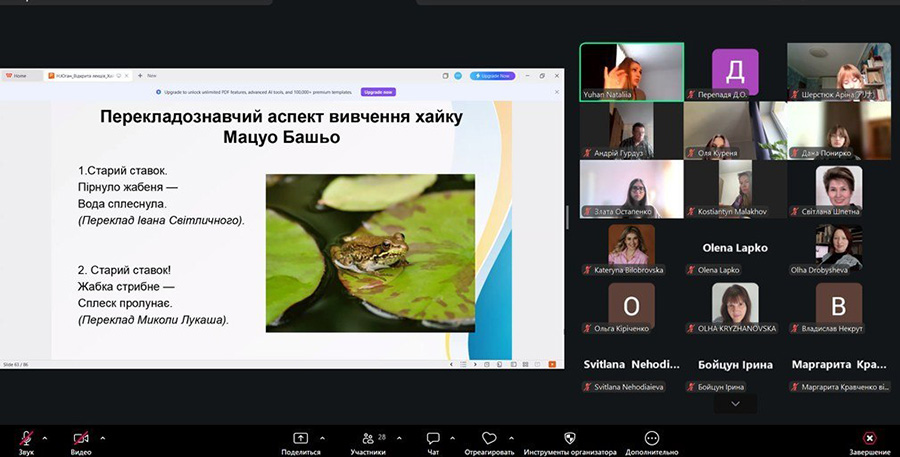
The lecture also included close readings of selected poetic texts, demonstrating the mechanisms of meaning-making within minimalist poetics. Special attention was given to the ability of haiku to condense multiple layers of meaning—from concrete images of nature to philosophical reflections on time, silence, and existence.
An important aspect of the lecture was the discussion of the reception of haiku in the European cultural context. It was noted that in the process of intercultural transmission, this form is often simplified, which underscores the need for a deeper understanding of its aesthetic and philosophical foundations.
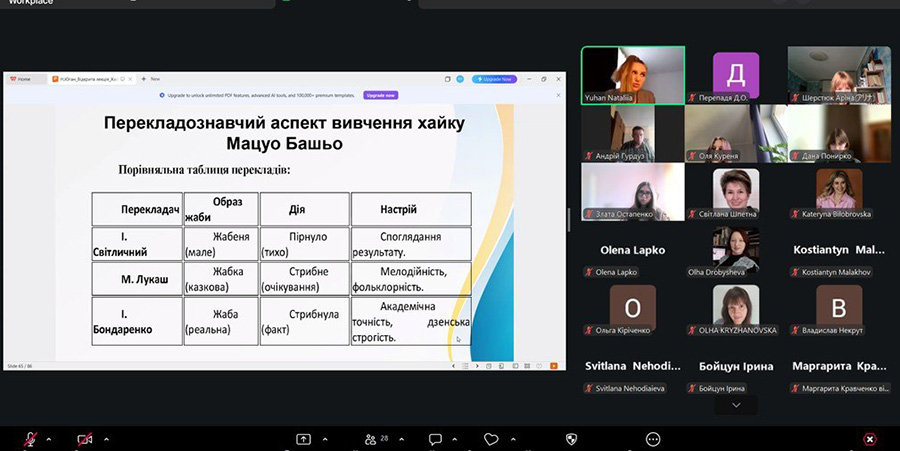
The lecture had a distinctly interdisciplinary character, combining literary, cultural, and philosophical approaches. This format contributed not only to the acquisition of theoretical knowledge but also to the development of students’ analytical thinking and their ability to interpret literary texts within a broader cultural framework.
The event generated considerable interest among the audience, encouraged active discussion, and became a platform for intellectual exchange. Participants, including members of the Youth Club of Eastern Cultures, noted the relevance of the topic and the high academic and methodological level of the lecture.
Such open lectures constitute an important component of the educational process, as they broaden students’ academic horizons, deepen their knowledge, and foster intercultural competence within the contemporary гуманітарного discourse.
Department of Literary Studies and Oriental Philology