Training on Shinrin-Yoku
The event was organized within the framework of the Center's activities in cooperation with the NGO "All-Ukrainian Ecological League" and is aimed at increasing psychological resilience, restoring internal resources and forming an environmentally conscious lifestyle of the university community.
During the training, the participants were introduced to the concept of shinrin-yoku - the Japanese practice of "forest bathing", which involves conscious presence in the natural environment through the involvement of all senses. As noted, this practice is not just a walk, but a systemic form of mental recovery, which is based on concentration on one's own sensations, slowing down and deep contact with nature.
Special attention was paid to the scientific substantiation of the effectiveness of shinrin-yoku. The participants learned that even a short stay among trees helps reduce stress levels, normalize physiological indicators and improve emotional state. In particular, the biological mechanisms of the influence of the natural environment were considered, including the action of phytoncides and increased activity of the immune system.
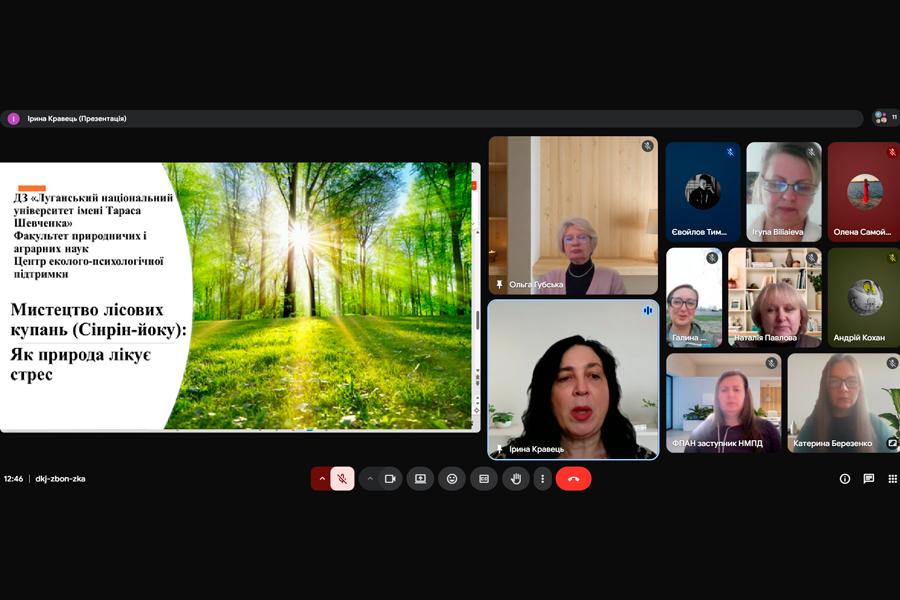

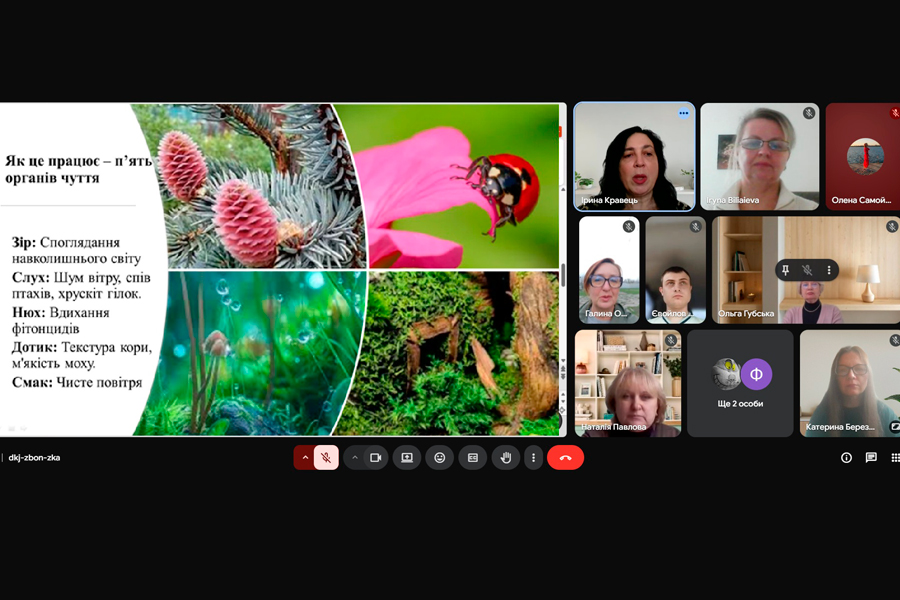


The practical part of the training was aimed at mastering the basic techniques of forest therapy. The participants considered:
the principles of “slow immersion” in the natural environment;
methods of sensory perception (listening, contemplation, touch);
the technique of forming an intention and the “threshold of interaction” with nature;
practices of concentration on the present moment and emotional recovery.
A separate block was devoted to the possibilities of adapting shinrin-yoku practices in urban environments - through the use of parks, green areas or even elements of nature in the workspace.
The participants of the training noted the practical value of the knowledge gained for overcoming professional burnout, reducing anxiety and increasing the overall level of psychological well-being.
Carrying out such activities corresponds to the strategic priorities of the university regarding the creation of a safe and health-preserving educational environment, supporting the mental health of participants in the educational process, and integrating the principles of sustainable development into educational activities.
The Center for Ecological and Psychological Support continues to implement innovative practices that combine ecological and psychological approaches, contributing to the harmonization of human interaction with the natural environment.
According to the Center for Ecological and Psychological Support