Therapeutic Photo Journey Held at the Environmental and Psychological Support Centre
The session was attended by lecturers from the Department of Biology and Agronomy and the Department of Landscape Gardening. The event was facilitated by Iryna Kravets, Coordinator of the Centre for Environmental and Psychological Support.
The central element of the meeting was a therapeutic photo journey designed to help participants restore emotional balance, take a break from everyday concerns, and discover new sources of inner strength. Observing autumn landscapes, taking photographs, and reflecting on what they saw all contributed to this process.
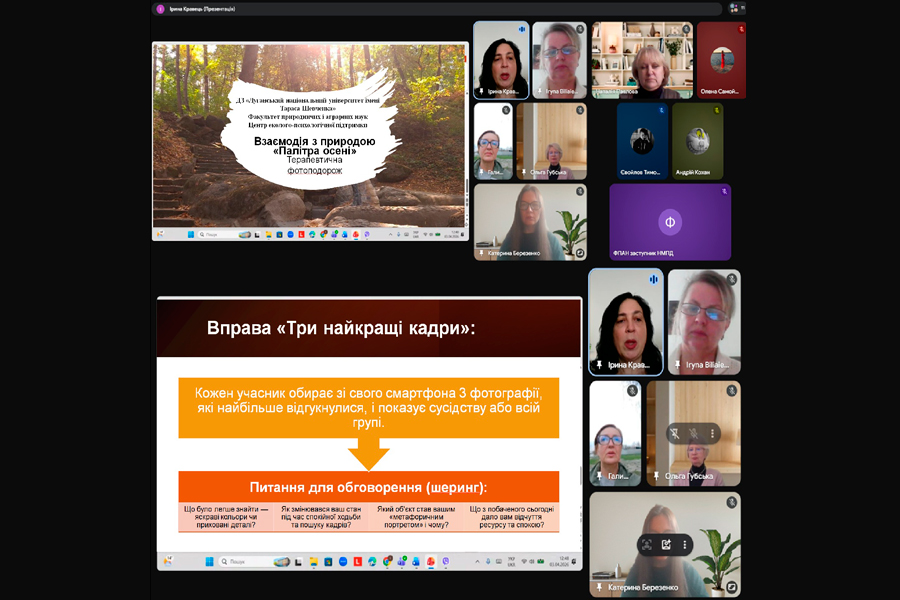
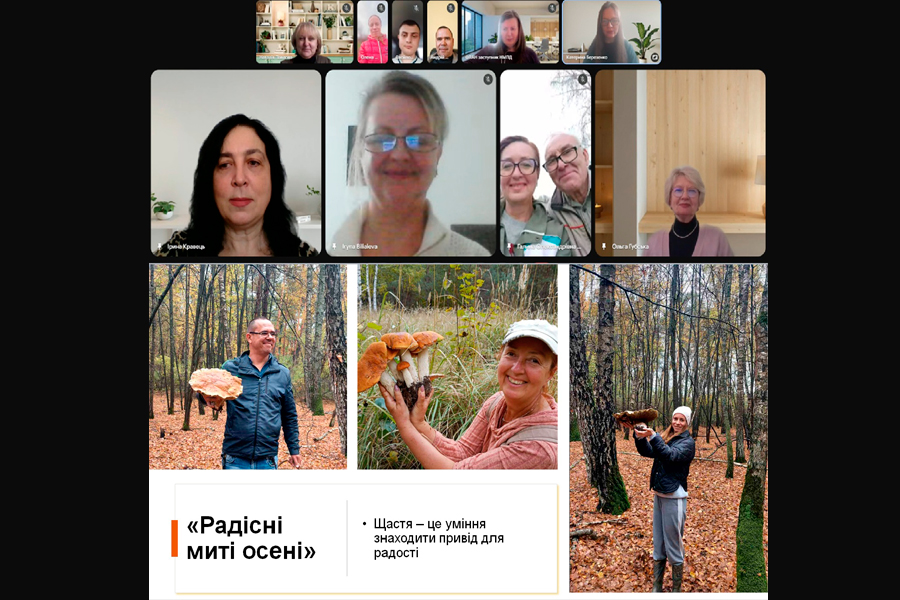
The main activity was the “Three Best Shots” exercise. Participants were asked to select three photographs on their smartphones that had made the strongest emotional impression on them and share them with a partner or the whole group. This format encouraged participants to focus on their individual perception of nature, notice details that might normally go unnoticed, and express their feelings through visual images.
Particular attention during the photo journey was given to themes revealing the emotional richness of autumn landscapes. During the “Unexpected Encounters” activity, participants explored nature’s ability to surprise us and reflected on the importance of remaining open to new experiences.
The image of a “Ray of Hope” became a symbol of resilience: even as the hours of daylight gradually decrease, sunlight reminds us of hope, renewal, and the coming of spring.
The theme “Autumn as a Mood” encouraged participants to reflect on the changing nature of human emotions through changes in the natural environment. Just like autumn weather, a person’s emotional state can change, combining joy and sadness. At the same time, the ability to share warmth and support one another remains an important resource for psychological well-being.
The “Joyful Moments of Autumn” section highlighted another important idea: happiness also lies in our ability to notice and appreciate simple reasons for joy.
The final stage of the activity was reflection. Participants discussed their impressions, compared their perceptions of vivid colours and barely noticeable details in nature, observed changes in their emotional state during quiet contemplation, and identified which images had become symbols of calm, hope, and inner strength for them.
Such activities are an integral part of the work of the Centre for Environmental and Psychological Support, which aims to combine environmental and psychological approaches, reveal the resource potential of the natural environment, and support the psychological well-being of the university community.
Acccording to the Centre for Environmental and Psychological Support