Presentation of a Micro-Project as Part of the VI Winter School of the NGO "Innovative University"
In the context of European integration, Ukrainian universities are increasingly considering the possibility of obtaining accreditation from foreign agencies included in the EQAR register. The development and implementation of the microproject “Opportunities, advantages and challenges of obtaining institutional accreditation by Ukrainian higher education institutions from a foreign agency registered in the European Quality Assurance Register for Higher Education (EQAR), in the context of the current legislation of Ukraine and integration into the European higher education space” brought together representatives of higher education institutions in Poltava and Kharkiv: Maksym Saibekov – Doctor of Philosophy, Senior Lecturer at the Department of Design and Media Production, Luhansk Taras Shevchenko National University; Margarita Kravchenko – Candidate of Philological Sciences, Associate Professor at the Department of Ukrainian Language and Journalism, LTSNU; Ihor Kolomak – Doctor of Philosophy, Associate Professor at the Department of Normal and Pathological Anatomy and Physiology of Animals, Poltava State Agrarian Academy; Olga Osova – Doctor of Pedagogical Sciences, Professor of the Department of Foreign Philology, Municipal Institution “Kharkiv Humanitarian and Pedagogical Academy” of the Kharkiv Regional Council.
The conference presented the preliminary results of the microproject, in the discussion of which representatives of the leadership of Luhansk Taras Shevchenko National University actively participated: Rector Olena Karaman, Vice-Rector for Scientific and Pedagogical Work Yaroslava Yurkiv. The participants of the event discussed the relevance of institutional accreditation in foreign agencies, and also outlined the strategic prospects for the implementation of the proposed “road map”, which confirmed the interest of the academic community in the implementation of international standards for ensuring the quality of higher education.
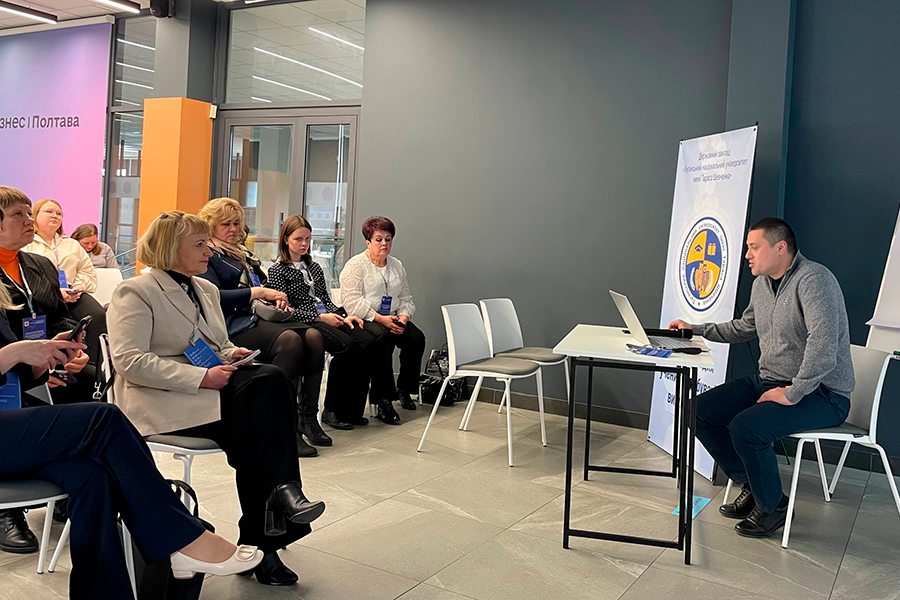
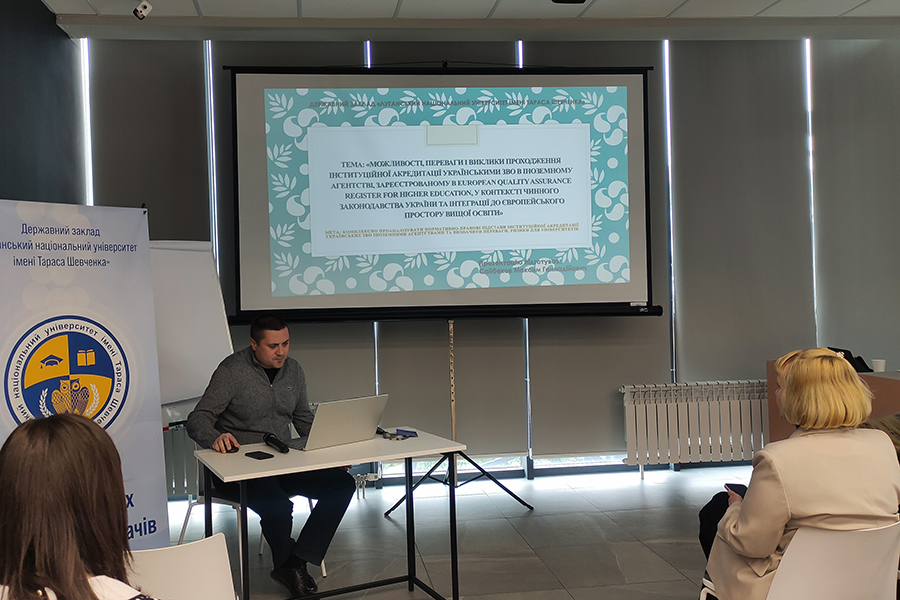

The microproject implementers set the goal of comprehensively analyzing the regulatory and legal bases for institutional accreditation of Ukrainian HEIs by foreign agencies, and identifying the benefits and risks for universities.
The main stages of the microproject implementation: 1) analysis of the current state of cross-border quality assurance of higher education in Ukraine and the regulatory and legal framework; 2) collection and analysis of information on foreign accreditation agencies registered in the EQAR register and included in the list of the Cabinet of Ministers of Ukraine; 3) creation of an analytical guide ("roadmap") for the HEI administration with an algorithm of actions and risk assessment; 4) assessment of the results and effectiveness of the implemented program, identification of prospects and problems that arose during the implementation of the microproject, formulation of conclusions; 5) presentation of the project.
During the implementation of the project, the regulatory framework was analyzed, in particular Articles 46 and 25-1 of the Law of Ukraine "On Education", the Law of Ukraine "On Higher Education", which determine the status of institutional accreditation and the role of the National Agency for Quality Assurance in Higher Education in cooperation with international institutions.
The main opportunities and advantages identified within the project are: 1) increasing the international prestige and recognition of HEIs; 2) simplifying the procedures for double diplomas and academic mobility; 3) inclusion in the DEQAR database, which is an indicator of reliability for European partners; 4) stimulating internal changes and improving education quality management processes.
At the same time, significant challenges and risks were identified: 1) financial aspect - the cost of services of foreign agencies (for example, ACQUIN, AQAS) ranges from €8,000 to €35,000; 2) language barrier – preparation of documentation (including self-assessment reports, etc.) in the amount of thousands of pages exclusively in English; 3) systemic risks – the threat of accreditation of “concepts” of programs without real students, use of template expert reports and attempts to legitimize low-quality institutions bypassing national norms.
Within the project, an action algorithm (“roadmap”) was developed, which includes strategic planning, mandatory verification of programs in the EDEBO, ensuring transparency and compliance with national standards of higher education. Practical cases of successful accreditation of Ukrainian HEIs (Lutsk National Technical University, Vadym Hetman Kyiv National Economic University, National University “Ostroh Academy”) by the Estonian agency HAKA and positive practices of accreditation of Ukrainian HEIs by the Hungarian MAB were also studied.
In the process of implementing the microproject, the results were tested by presenting them at various levels of the academic community, in particular at the level of the administration, faculties, and departments. Online meetings were held using the Zoom and Google Meet platforms, which allowed for effective communication between participants and the presentation of key developments of the microproject.
Thus, the implementation of the microproject made it possible to establish that international institutional accreditation is a powerful tool for the transformation of higher education institutions through the “mirror effect”. The main condition for the legitimacy of its results in Ukraine is the choice of an agency that is simultaneously registered in EQAR and included in the list of the Cabinet of Ministers. The success of the procedure depends on long-term preparation (12-18 months), coordinated work of the interdepartmental team, and the readiness of the administration for financial investments and deep management changes.
The microproject implementers express their gratitude to the NGO "Innovative University" for creating conditions and support at all stages of the preparation and implementation of the project.
Department of Quality Management of Educational Activities