Specific Features of Teaching the School Component in Professional Pre-Higher Education Institutions
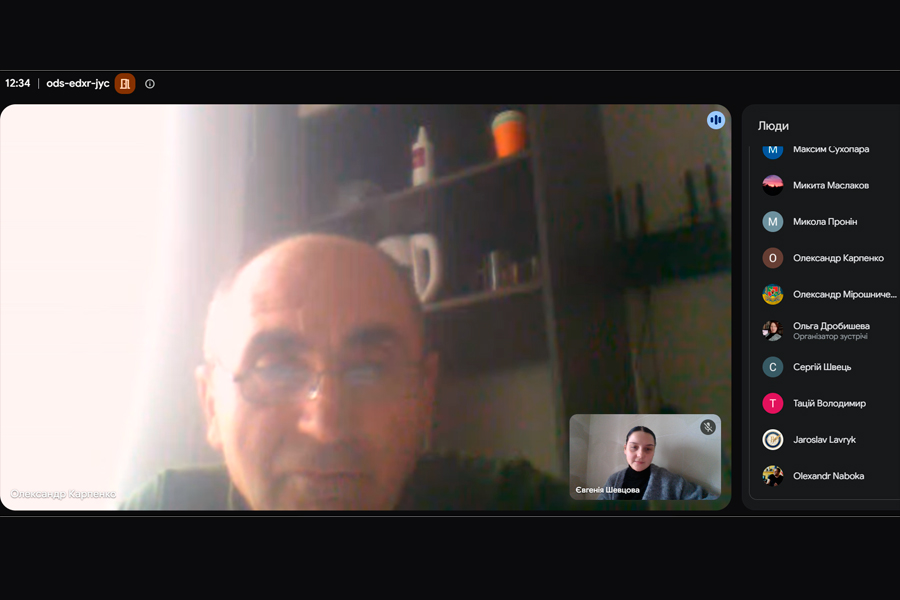
The invited lecturer was Oleksandr Mykolaiovych Karpenko, a teacher of the highest qualification category and a teacher-methodologist at the Professional College of LTSNU.
During the meeting, the lecturer shared his practical experience of teaching history and humanities within the professional pre-higher education system. Particular attention was paid to the specific nature of a college teacher’s work, the differences between teaching in general secondary education institutions and colleges, and opportunities for professionally oriented history education.

Special attention was given to the specifics of teaching the school history component at college. As the lecturer emphasized, effective teaching requires not only thorough subject knowledge but also an understanding of students’ professional interests. Historical material becomes more accessible and practically meaningful when it is connected with students’ future professions.
This involves drawing on the history of the hotel and restaurant industry, sports, science and technology, and other fields, making it possible to demonstrate the connection between history, professional activity, and everyday life.
A lively discussion focused on the role of a history teacher at a college and the range of their professional responsibilities. Participants were interested in how the work of a college teacher differs from that of a schoolteacher, particularly with regard to educational and mentoring activities.
Oleksandr Karpenko spoke about supervising academic groups, participating in the organization of events dedicated to national holidays and commemorative dates, as well as the important role of a history teacher in developing civic awareness, patriotism, and a responsible attitude toward Ukraine’s historical past.
Another highly relevant topic was the use of artificial intelligence in education and the resulting changes in approaches to assessing students’ academic work. The lecturer emphasized the need to develop students’ critical thinking, their ability to work with historical sources, analyze and compare information, formulate their own conclusions, and substantiate their positions.
These skills make it possible to assess not only the final result of a student’s work, but also the independence of their thinking, the depth of their understanding of the material, and their ability to make well-reasoned judgments.
The meeting evolved into an open professional dialogue. Students actively asked questions, discussed the specifics of their future teaching careers, and shared their own thoughts about what inspires them to choose the profession of historian and teacher. This format of communication not only helped them better understand the specifics of working at a college but also allowed them to discover new opportunities for the professional development of future educators.
The guest lecture strengthened the practice-oriented component of the educational programme by providing students with an opportunity for direct interaction with a practicing educator. Discussions of real-life professional situations, contemporary teaching methods, and approaches to assessing learning outcomes enabled students to connect their theoretical training with the current requirements of teaching practice and identify areas for the professional development of future teachers of history and civic education.
We thank Oleksandr Mykolaiovych Karpenko for the insightful lecture, his openness to discussion, and the opportunity to learn about real-world experience in teaching history at a professional pre-higher education institution. We also thank everyone who contributed to organizing the meeting.
We look forward to further meetings, new professional discussions, and continued cooperation!
Department of History and Archaeology