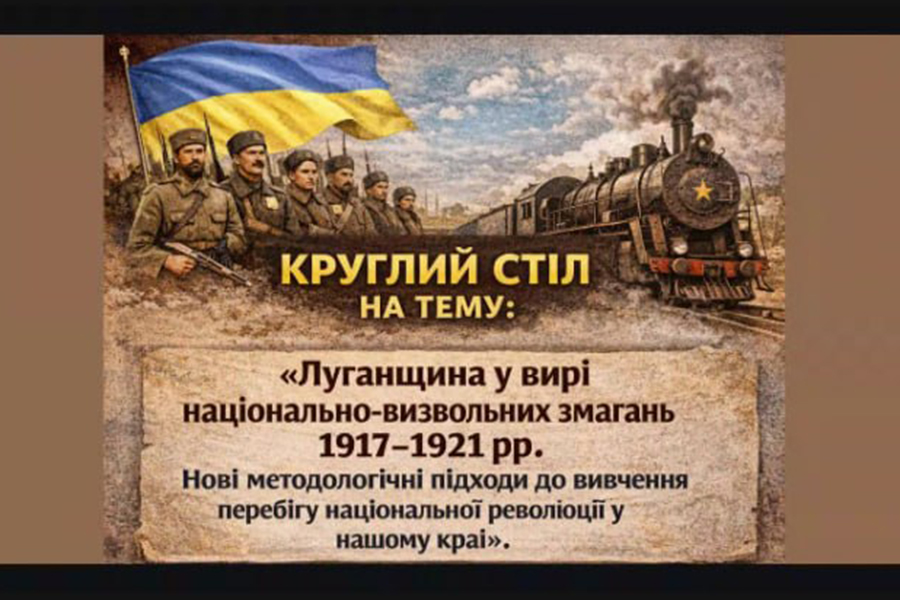
Round Table
The purpose of the round table was to discuss new methodological approaches to studying the events of the Ukrainian Revolution of 1917–1921 in the territory of the Luhansk region, to update the regional dimension of national liberation struggles, and to search for new topics, plots, and personalities that require proper coverage in the modern scientific and educational space.
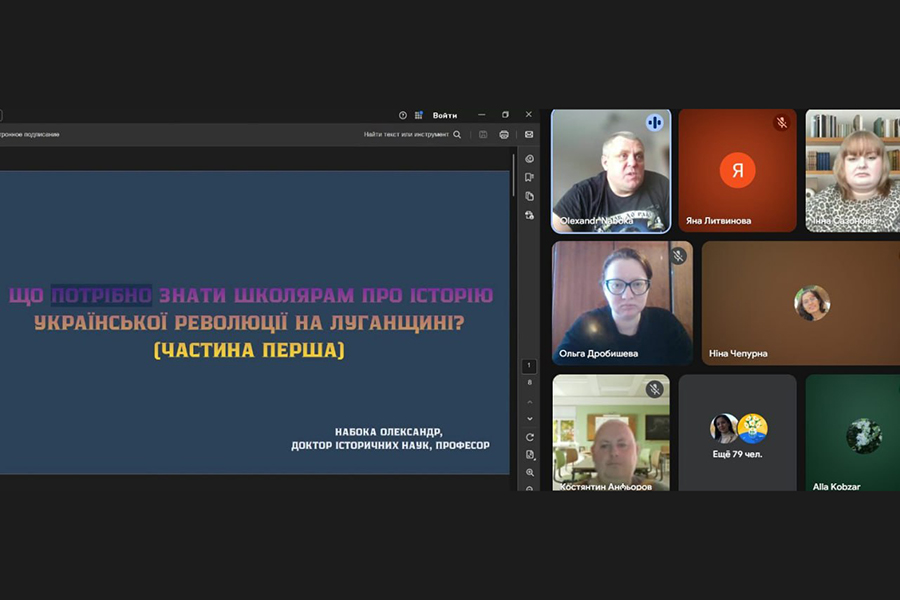
The head of the Starobilsk City Military Administration, Yana Litvinova, addressed the participants of the round table with a welcoming speech, emphasizing the importance of preserving historical memory, understanding the past of the Luhansk region in a national context, and consolidating the efforts of scientists, educators, and representatives of the cultural sphere to affirm Ukrainian national and civic identity.
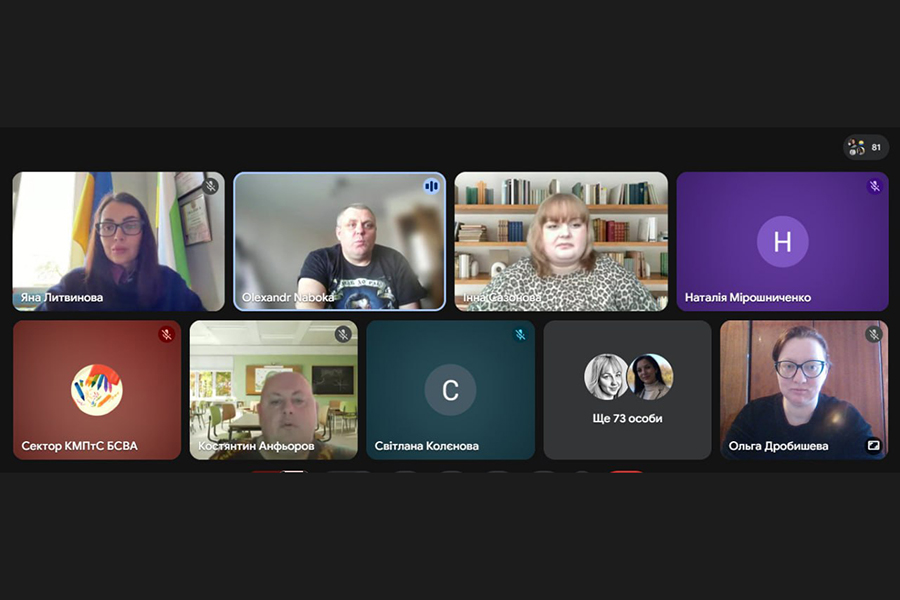
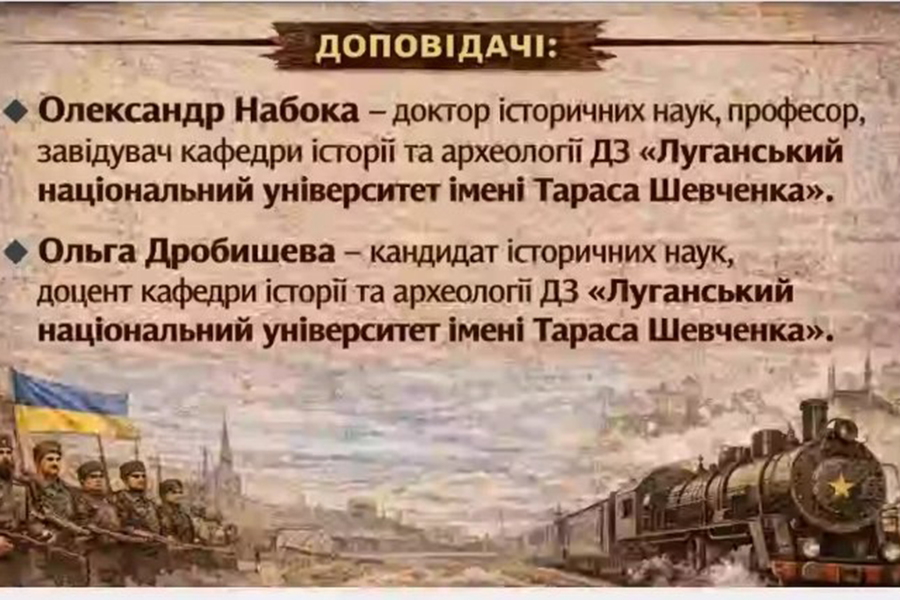
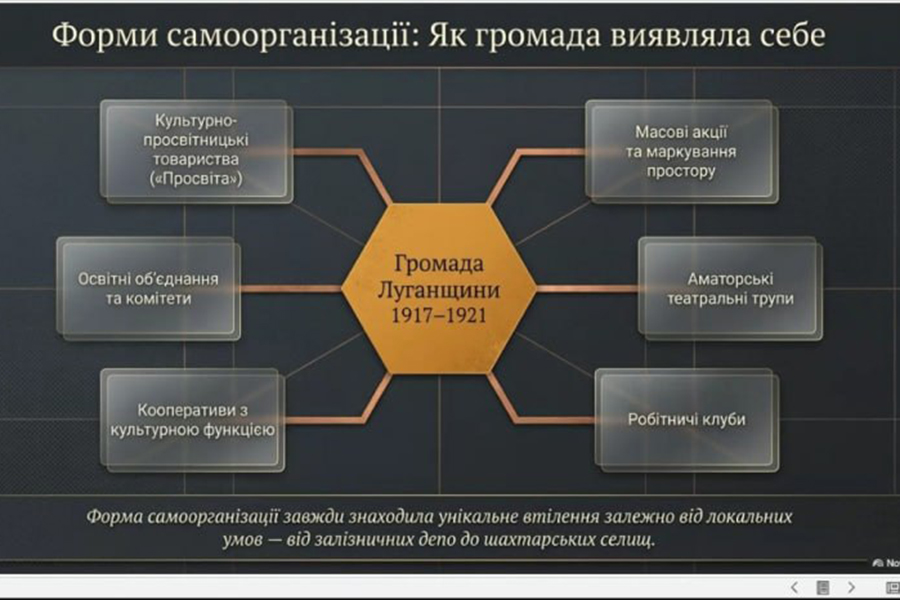
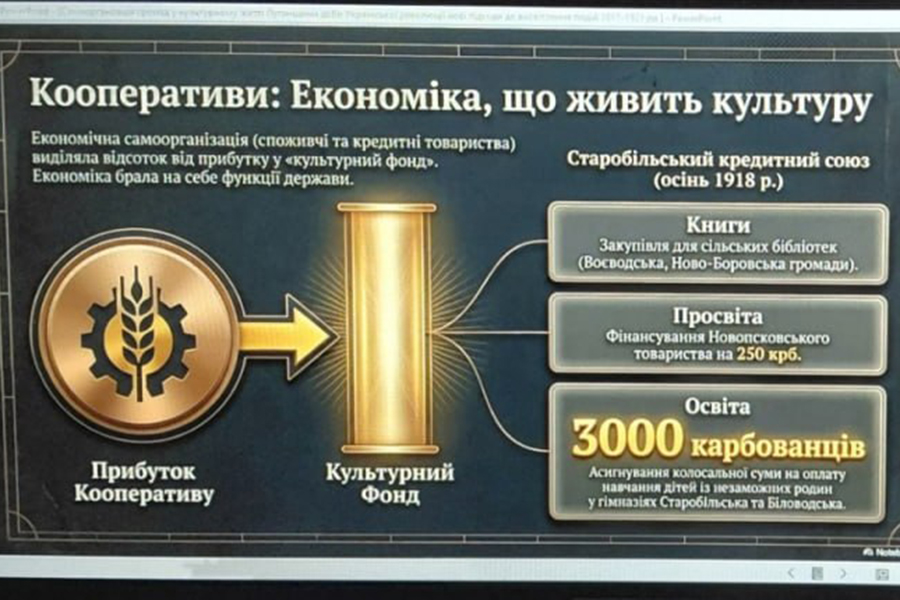
The discussion included reports by Professor Oleksandr Naboka, Head of the Department of History and Archaeology, and Associate Professor Olha Drobysheva. In his speech, Oleksandr Naboka focused on what schoolchildren should know about the events of the Ukrainian Revolution of 1917 in Luhansk Region. The speaker emphasized the importance of a Ukrainian-centric approach to covering these events in the school history course, drawing attention to the need to more widely introduce new plots, local events, and figures related to the revolutionary processes in the region into the educational process. Olha Drobysheva presented the topic of community self-organization in the cultural life of Luhansk Region during the Ukrainian Revolution as a promising new approach to covering the events of 1917–1921, which allows us to see the revolution not only through the prism of political and military processes, but also through the activity of local communities in the cultural sphere.
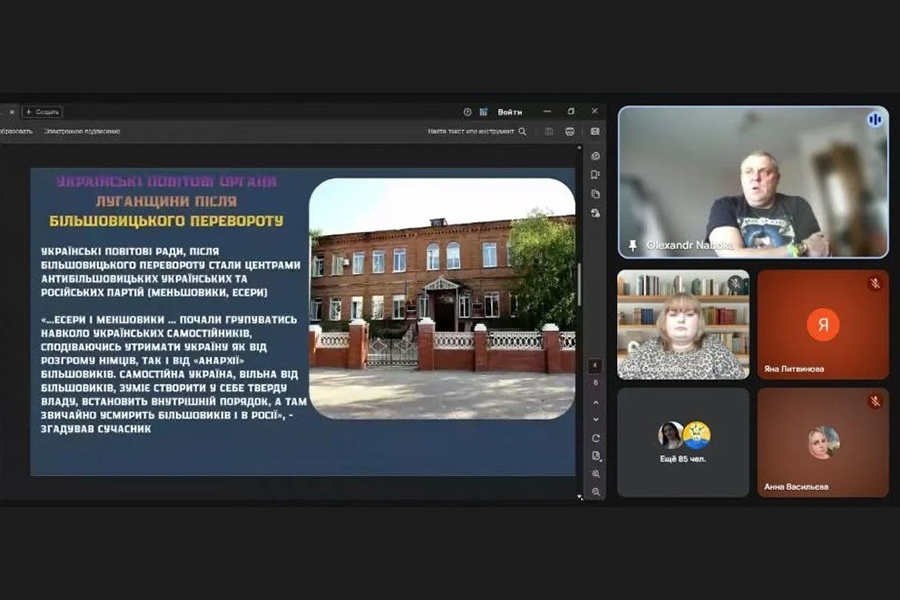
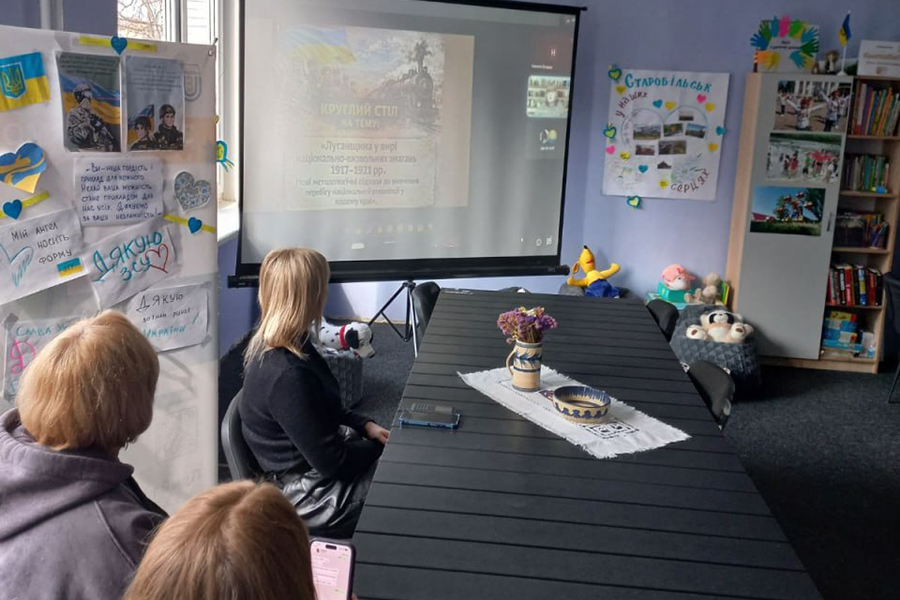
The participants of the event were educators and cultural figures interested in deepening their knowledge of the history of the Luhansk region and developing modern approaches to its interpretation. The reports aroused a lively reaction from the audience. During the round table, the participants discussed the current problems of studying the regional history of the Ukrainian Revolution, the importance of local material for forming a holistic vision of the national liberation struggle, as well as the role of historical education and culture in forming a holistic vision of the past of the Luhansk region as an integral part of the history of Ukraine.
According to the Department of History and Archaeology