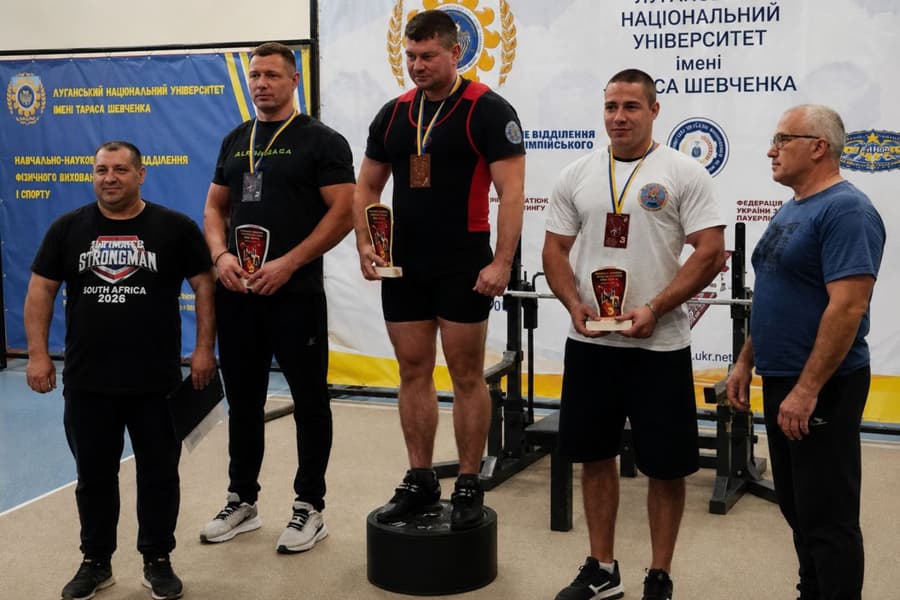
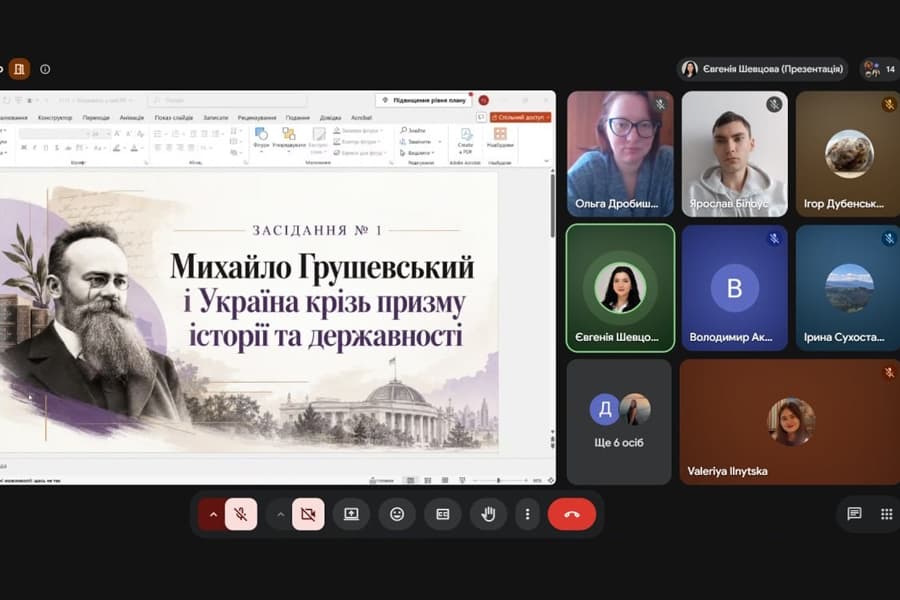
Guest Lecture by Practicing Teacher Margaryta Bodnariuk
The Faculty of Social and Humanitarian Sciences hosted a guest lecture by Margaryta Bodnariuk, a history teacher and social pedagogue at the Hlybotsky Professional Lyceum, a vocational education institution, a graduate of Luhansk National University, and a reviewer of master's theses for the educational program "Secondary Education (History and Civic Education)".
Margaryta Bodnariuk is an experienced practicing teacher who combines teaching and social and pedagogical activities in the vocational education system. Margaryta Serhiivna has significant experience in developing educational and methodological materials, in particular, she is a member of the author's team for the development of integrated courses for vocational education institutions recommended by the Ministry of Education and Science of Ukraine. In her work, she actively implements the approaches of the New Ukrainian School, adapting them to the specifics of the vocational training of students. The lecturer is a permanent partner of the Department of History and Archaeology and the Faculty of Social and Humanitarian Sciences, contributing to the combination of academic training with the current requirements of the educational environment.
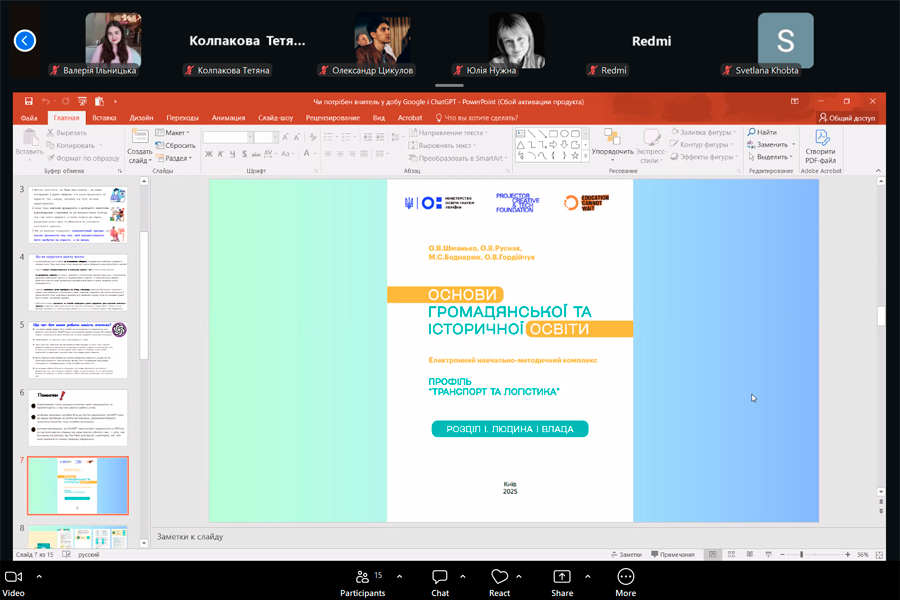
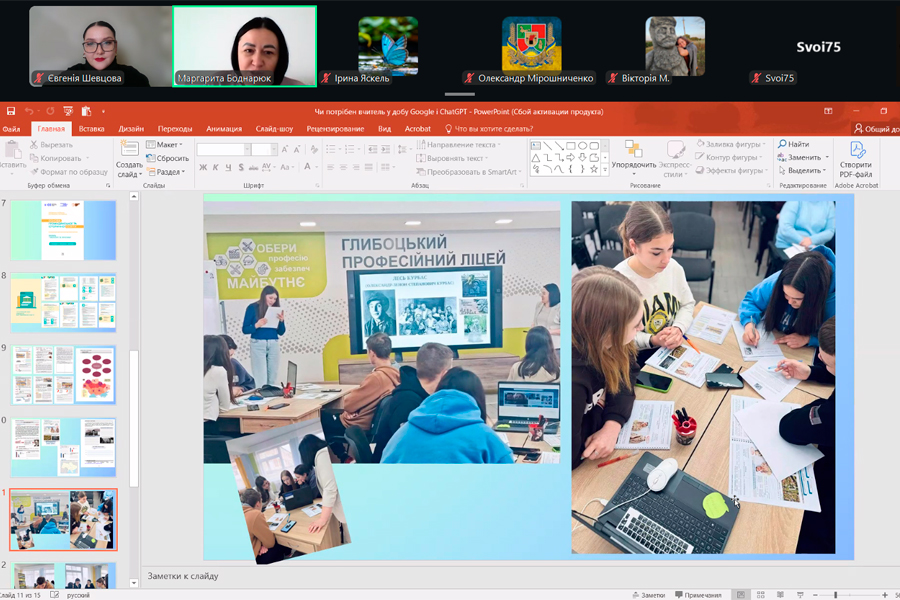
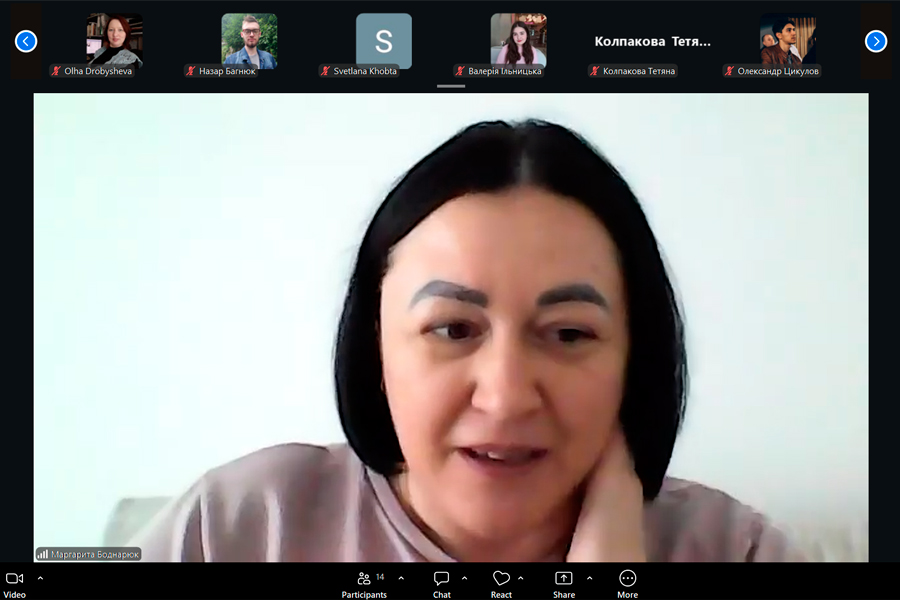
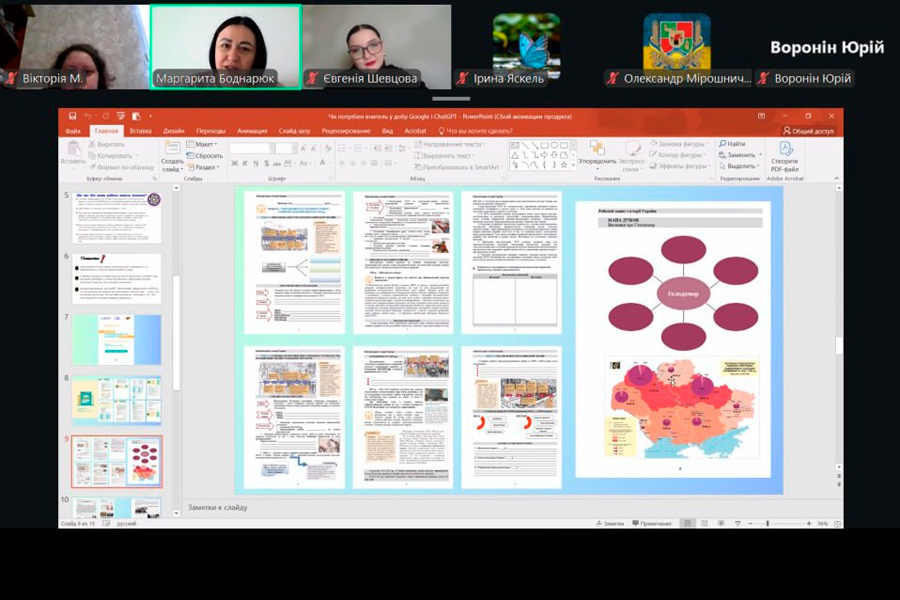
The event was attended by scientific and pedagogical staff of the faculty, in particular the departments of history and archaeology, philosophy and sociology, as well as higher education students of the first (bachelor's), second (master's) and third (educational and scientific) levels, including students in the specialties "History and archaeology", "Secondary education (History and civics)" and "Secondary education (History and law)".
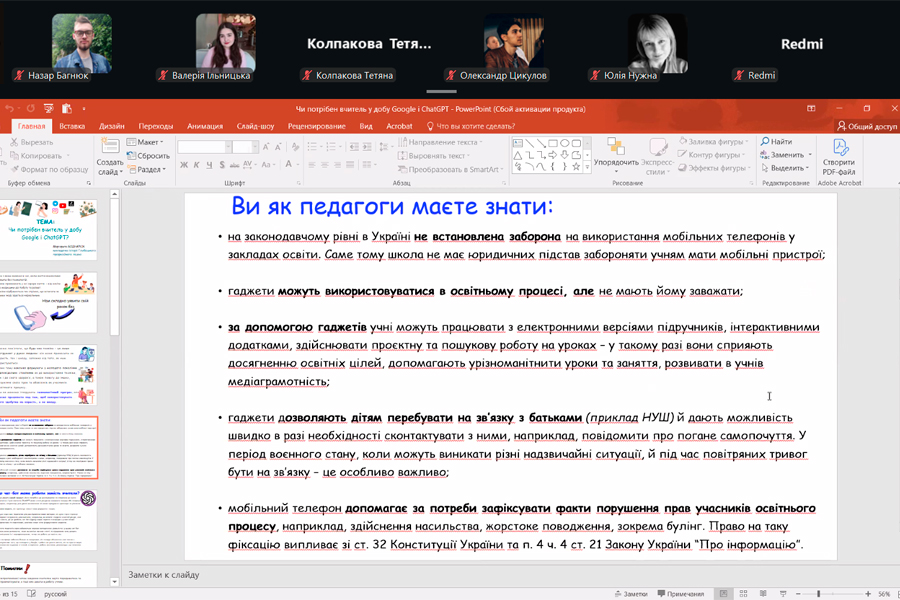
The topic of the lecture "Is a teacher needed in the age of Google and ChatGPT?" became the basis for discussing current challenges related to the digitalization of the educational process and the implementation of artificial intelligence tools.
During the speech, attention was focused on the changing role of the teacher in the modern educational environment. In particular, it was emphasized that digital technologies do not replace the teacher, but expand his professional capabilities, while increasing the requirements for the level of critical thinking, digital competence and academic integrity. Special attention was paid to the practical aspects of using digital tools in teaching: the use of electronic resources, interactive platforms, the organization of project and research activities of students. It was emphasized that the effective use of such tools requires pedagogical support, a balanced selection of content and the ability to critically evaluate information.
During the discussion, the participants raised a number of issues related to practical experience in vocational education institutions, in particular, taking into account the regional specifics of the educational environment. Considerable attention was paid to the development of critical thinking of education seekers in conditions of an abundance of information and the availability of digital tools. Separately, the challenges associated with the professional workload of a teacher in the information society, the need to combine teaching, educational and methodological activities, as well as the search for effective approaches to organizing learning in conditions of constant technological changes were discussed.
We express our sincere gratitude to Margaryta Bodnariuk for a meaningful lecture, openness to professional dialogue, willingness to share practical experience and consistent interest in the training of future teachers.
Yevheniia Shevtsova
Senior Lecturer, Department of History and Archaeology