Days of Oriental Studies at the Faculty of Social and Humanitarian Sciences
Day 1: “Eastern Philosophy in Park Art”
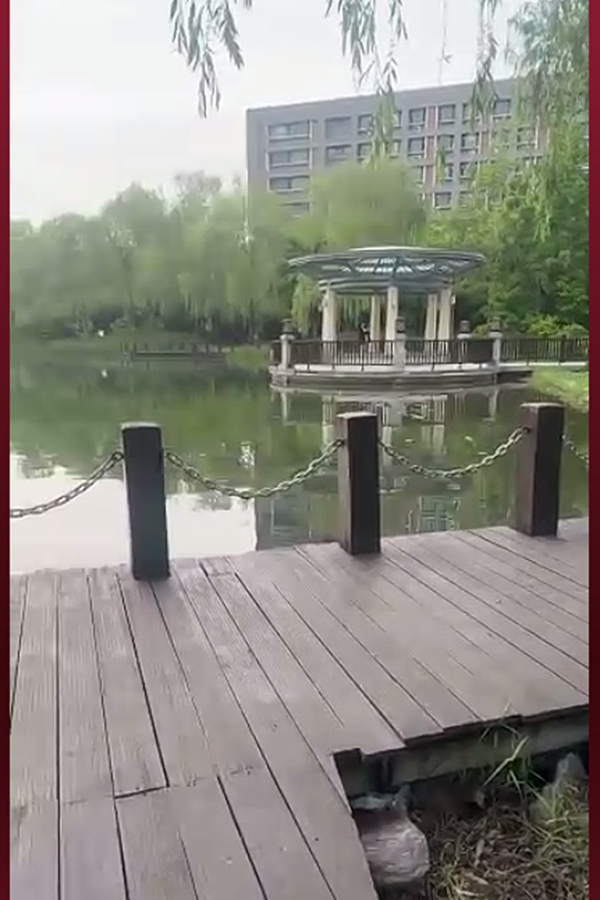
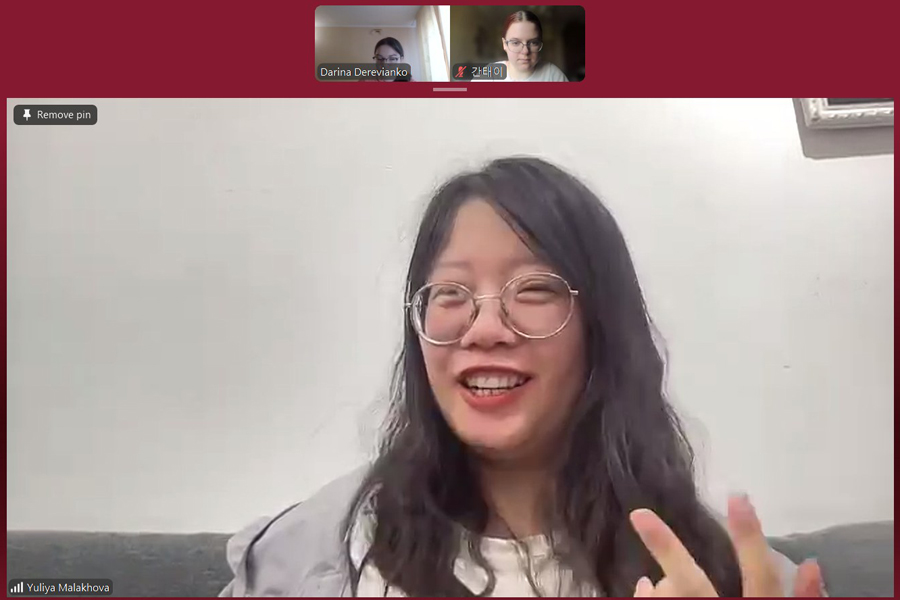
We visited a virtual excursion to the mirror lake “鉴湖”, conducted by Yulia Malakhova, Ph.D., Associate Professor. The participants had the opportunity not only to get acquainted with the cultural and historical features of this unique place, but also to discuss the philosophical principles that shaped the worldview of Chinese civilization. The discussion contributed to a deeper understanding of the relationship between nature, culture, and thinking.
Day 2: “Translation through the prism of culture”
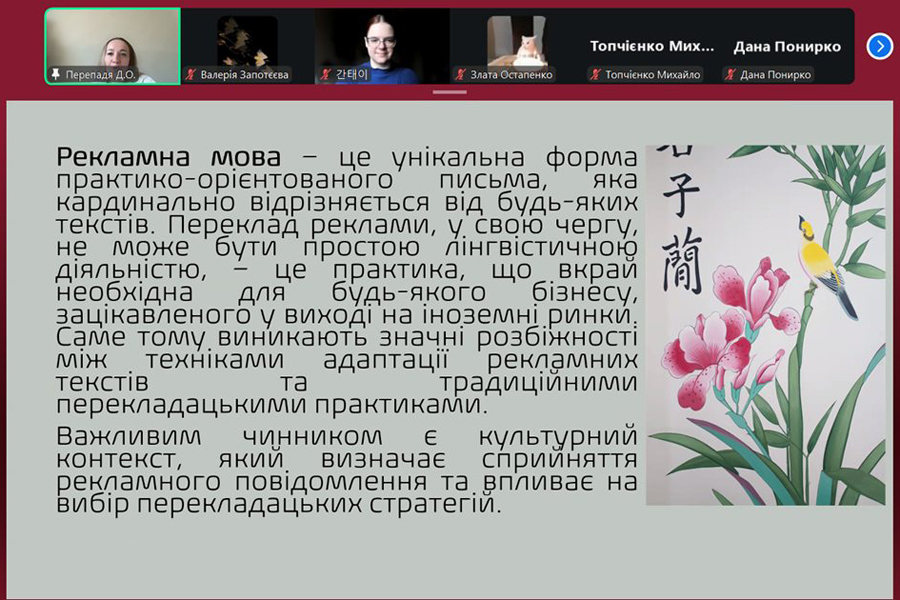
Ph.D., Associate Professor Daria Perepadia conducted a seminar on “Modern approaches to the translation of advertising and advertising slogans”. The participants got acquainted with the features of adapting slogans through the prism of linguistic differences and intercultural communication, discussed examples of effective and problematic translation solutions. Daria Perepadia demonstrated how linguistic differences and cultural contexts influence the adaptation of slogans while maintaining their impact on a foreign-speaking consumer and emphasized the importance of understanding social and cultural differences for future translators.
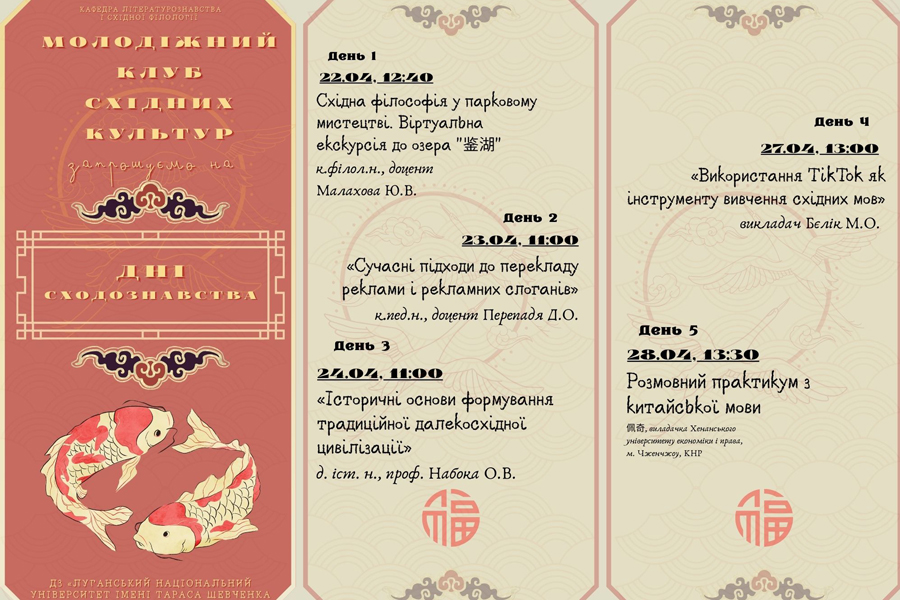
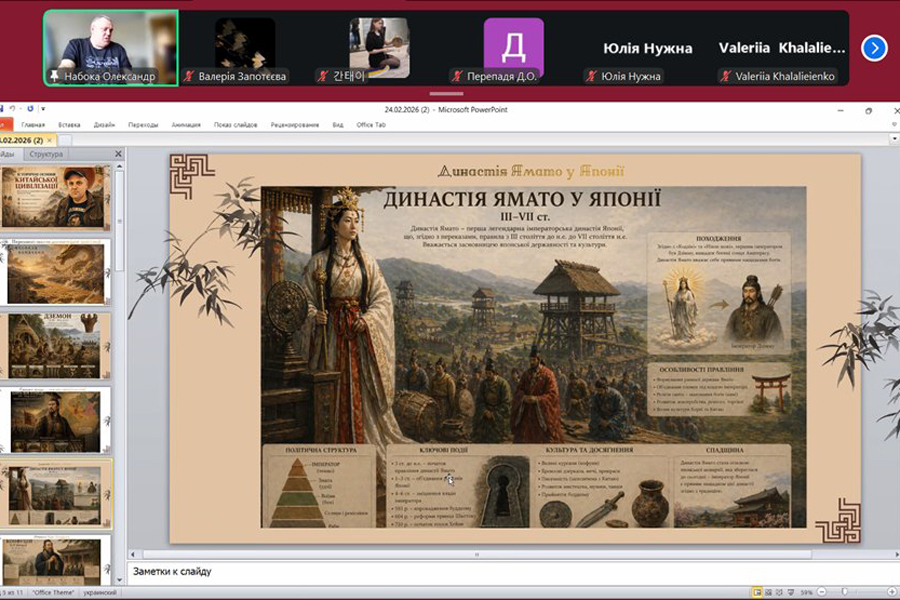
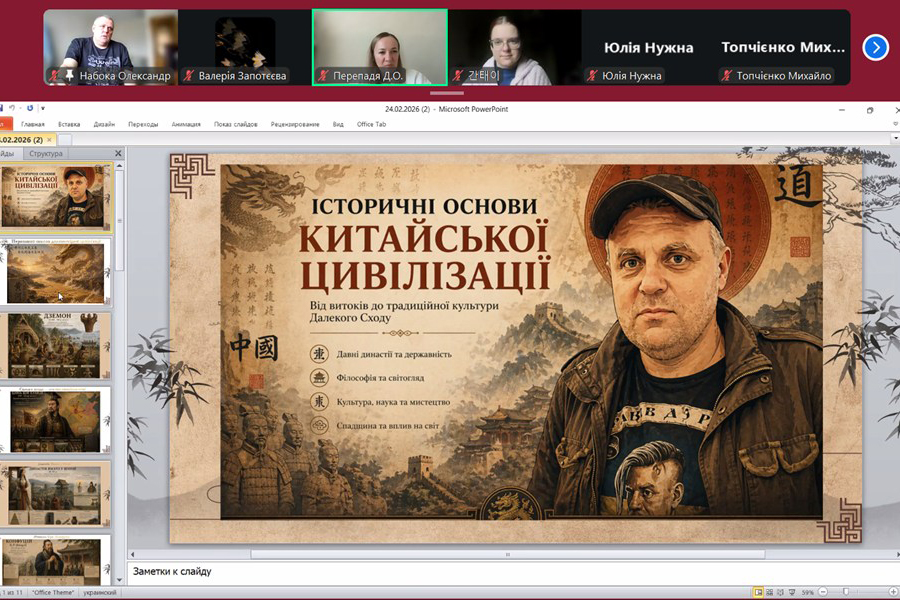
Day 3: “Historical Foundations of the Formation of Traditional Far Eastern Civilization”
Dr. of History, Prof. Oleksandr Naboka gave a guest lecture for Orientalists and all guests of the club. He gave a thorough analysis of the origins and stages of the formation of Far Eastern civilization, outlining the key factors of its cultural and social development. The lecture was not only informative, but also practically useful for students of Oriental studies. The meeting ended with a lively discussion and agreed on the prospects for further cooperation. The event demonstrated the importance of integrating historical knowledge and language studies in the preparation of future Orientalists. The participants received a holistic understanding of how language reflects historical experience and cultural traditions, which opens up new prospects for further scientific research and educational projects.
Day 4: “Innovative Tools for Teaching Eastern Languages”
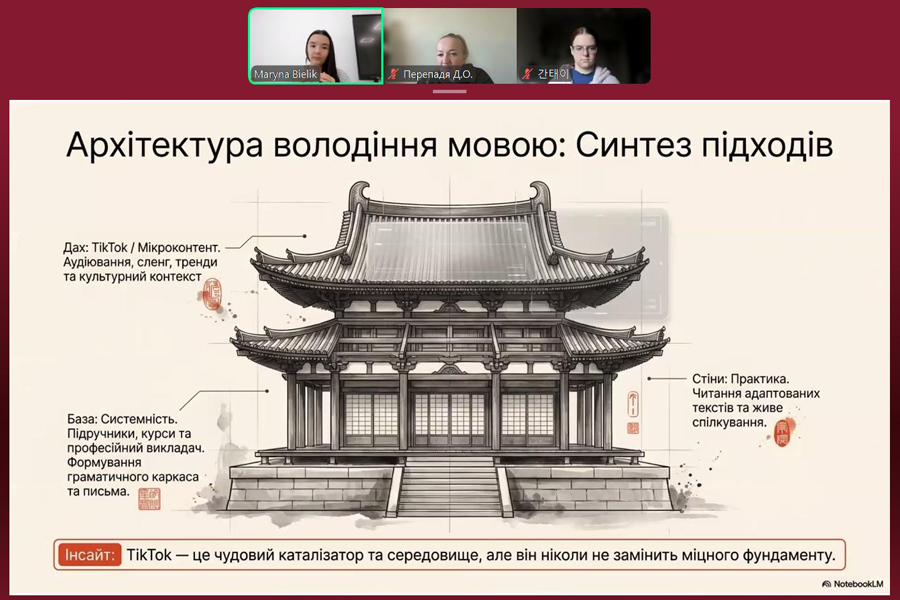
Teacher Marina Belik conducted a methodological seminar on the topic “Using TikTok as a Tool for Learning Eastern Languages”. All participants had the opportunity to familiarize themselves with practical examples of integrating social networks into the educational process, in particular their role in mastering modern vocabulary, neologisms, jokes and immersion in a virtual language environment. Special attention was paid to the advantages of microcontent for learning: its ability to quickly transmit information, maintain interest in learning and form skills in perceiving foreign language material in a dynamic format. Thus, the seminar demonstrated that the use of TikTok and other digital platforms can become an effective tool in teaching and learning Eastern languages, contributing to the combination of academic consistency with current trends in modern communication.
Day 5: “Conversational Chinese Language Workshop”
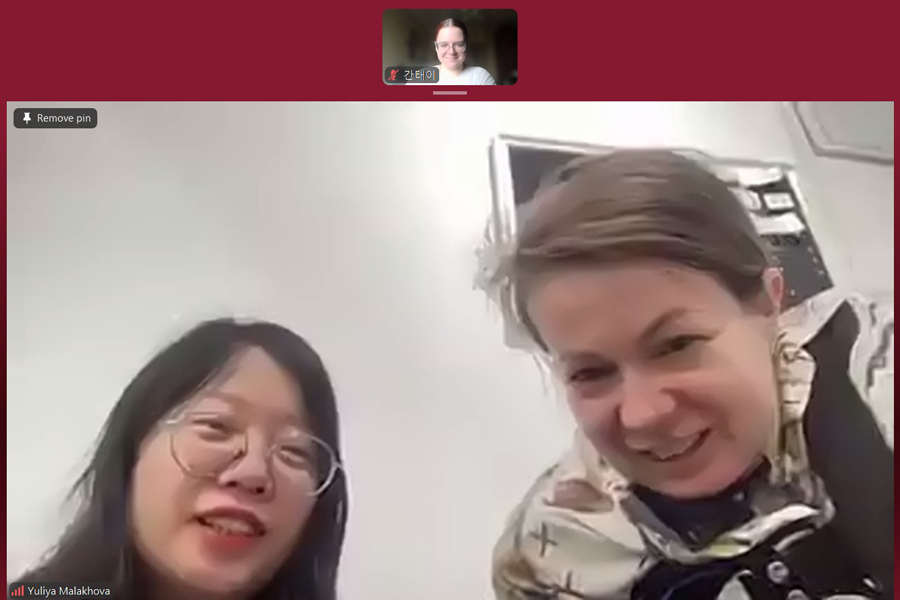
Students majoring in “Oriental Languages and Literatures (including Translation), First Major - Chinese” met with Pei Qi, a lecturer at Henan University of Economics and Law, Zhengzhou (PRC). They discussed Chinese holidays and traditions, as well as classical Chinese literature. Such a meeting was an important stage in the formation of students’ intercultural competence, contributed to deepening their knowledge of the cultural realities of China and expanding their experience of communicating with native Chinese speakers.
Youth Club of Oriental Cultures